
Timeline
2024 - 2025
Role
HCI Research, Interaction Design, Prototyping (Solo Project)
Tools
Unity (OpenXR), Figma, Meta Quest
Demo of the 'Getting Your VR Legs' onboarding experience.
40% — 70% of VR users experience VR sickness within just 15 minutes. With little support from current onboarding systems, many quit after just one bad gaming session.
In this project, I explored how guided, comfort-aware onboarding can reduce disorientation and help users build confidence in VR. My final prototype rethinks the first steps into virtual reality.
I built this project as my capstone thesis in the HCI/d Master’s program at Indiana University Bloomington and it reflects a synthesis of interaction design, human-centered research, and experiential prototyping.
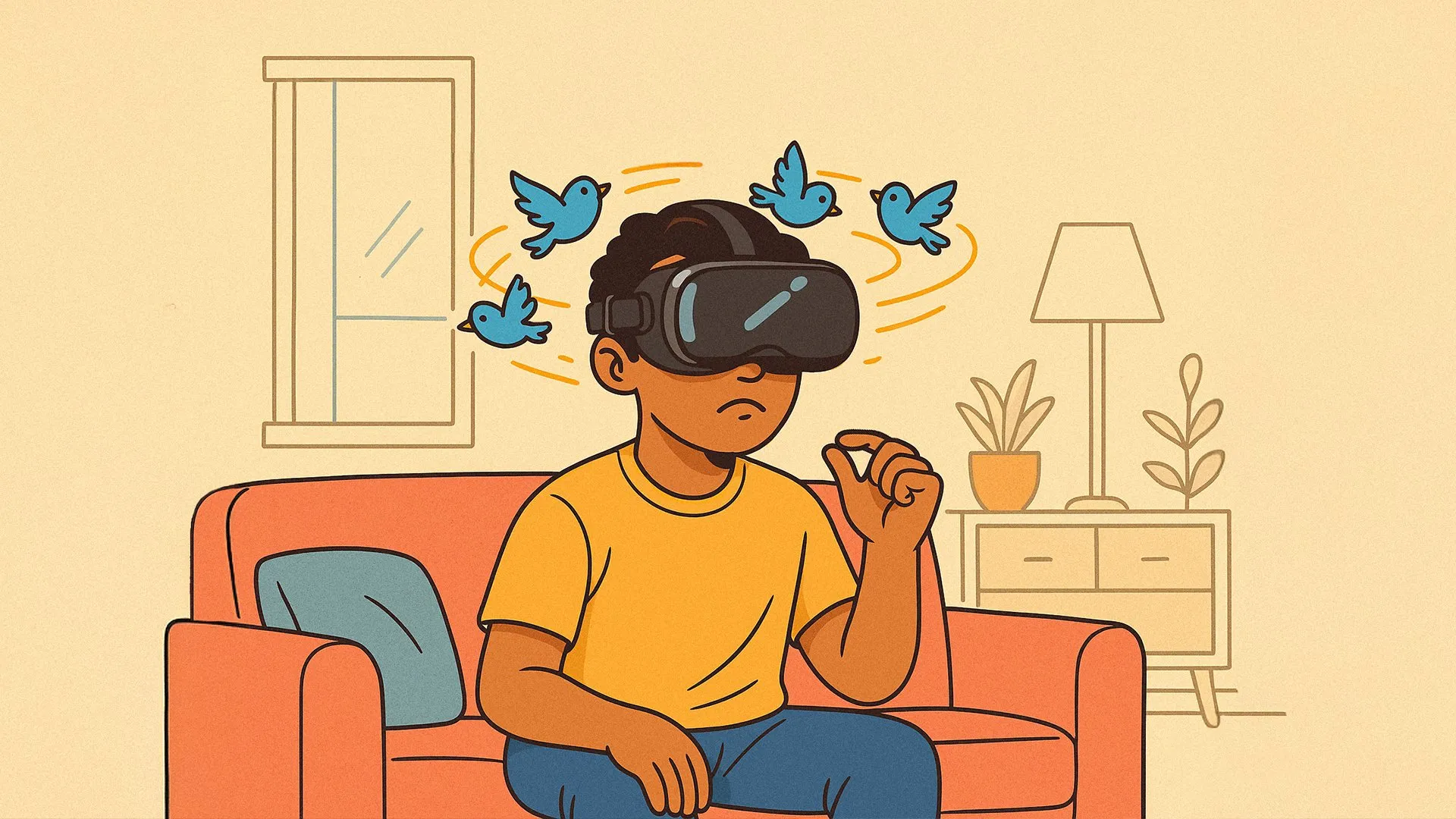
Visual representation of VR sickness symptoms and their impact on user experience.
VR sickness often happens when a user’s visual motion doesn’t match what their body feels (sensory mismatch).
For beginners, discomfort is made worse by unclear prompts, fast scene changes, and tutorial pacing that assumes readiness. So, I asked the design question:
Why focus on onboarding, you ask?
Because from my early interactions with VR users, I realized how much first 10–15 minutes matter. It’s the user’s first embodied experience. If they feel disoriented, they’re likely to quit and never come back. But if we can design onboarding that helps them acclimate, they might stick around and explore more VR content.
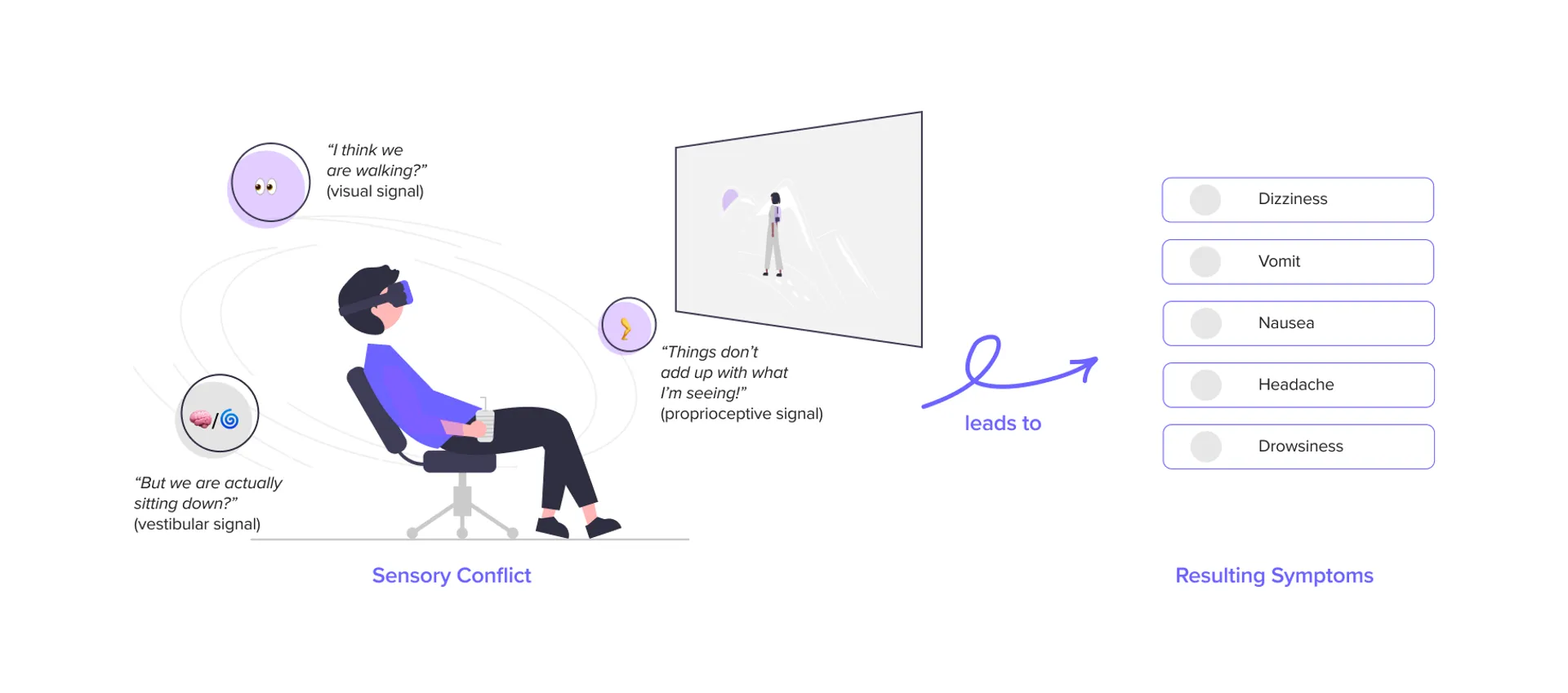
Illustration of sensory conflict theory explaining VR sickness.
I focused on helping beginners “get their VR legs” by reducing disorientation and increasing confidence during the first-time experience. I defined what this meant in terms of design scope and constraints.
I also focused on interaction and content pacing mainly, which are the parts a designer can control immediately:
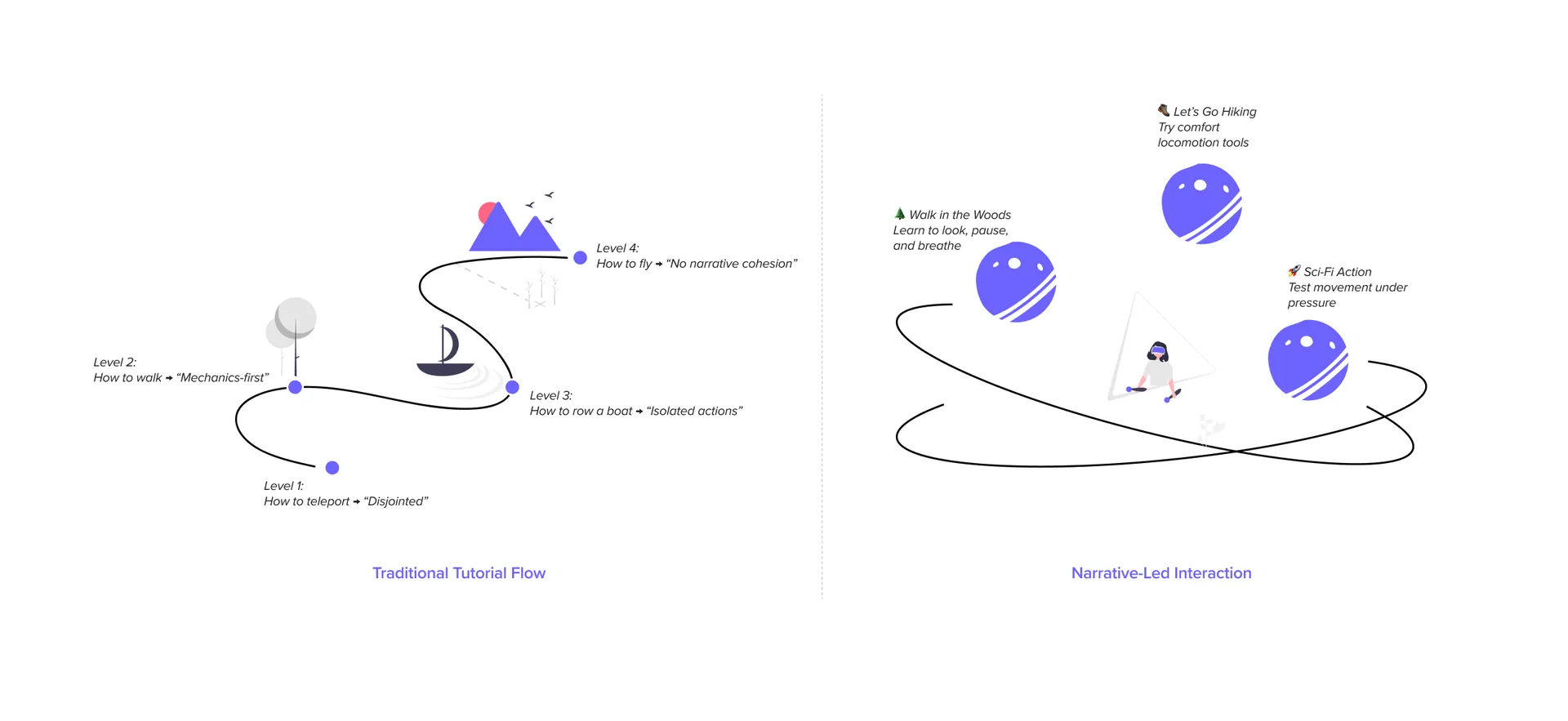
Design concepts for a narrative-led VR onboarding experience.
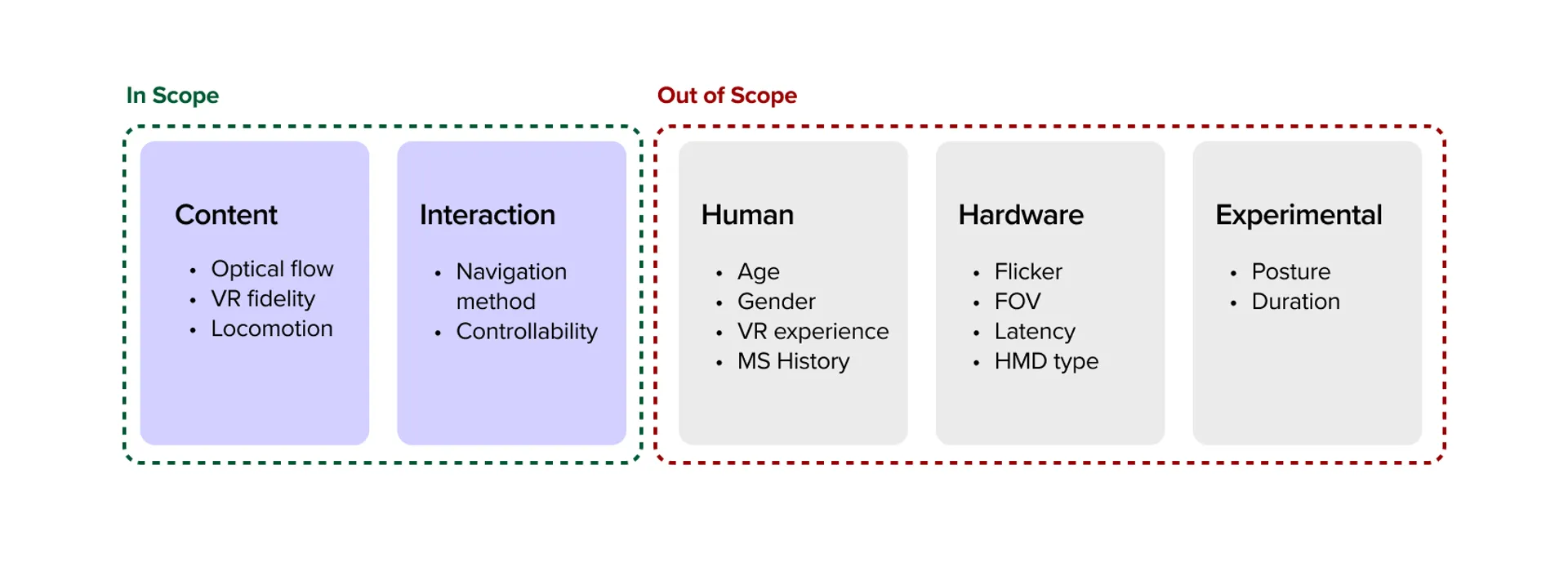
Scope of this project focusing on interaction and content pacing.
From literature and common VR comfort guidance, I distilled a few onboarding rules:
— Reduce surprise: prepare users before transitions
— Give agency: let users control when to proceed
— One new thing at a time: lower cognitive load
— Stabilize presence: consistent tone + calm environment
I used bodystorming to simulate “first time in VR” moments (entering a space, receiving movement prompts, deciding what to do). Then I built early Unity scenes and tested with beginner users.
What I observed (key findings):
— Transitions created the most hesitation (“what’s happening now?”)
— People wanted time to look around and settle before moving
— Fixed pacing didn’t work, users needed self-paced progression
These findings directly shaped the final structure.
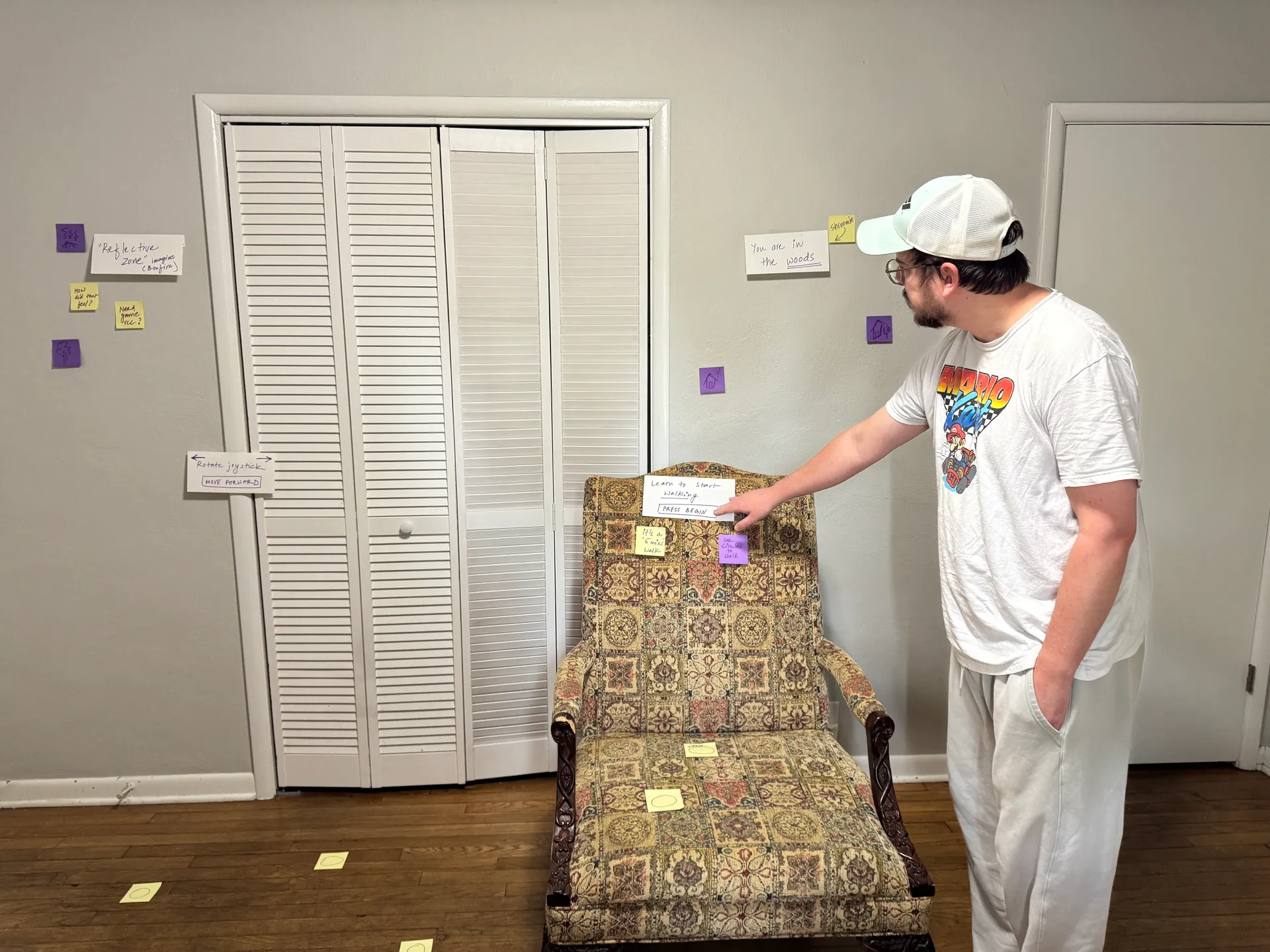
Bodystorming session capturing user interactions and feedback.
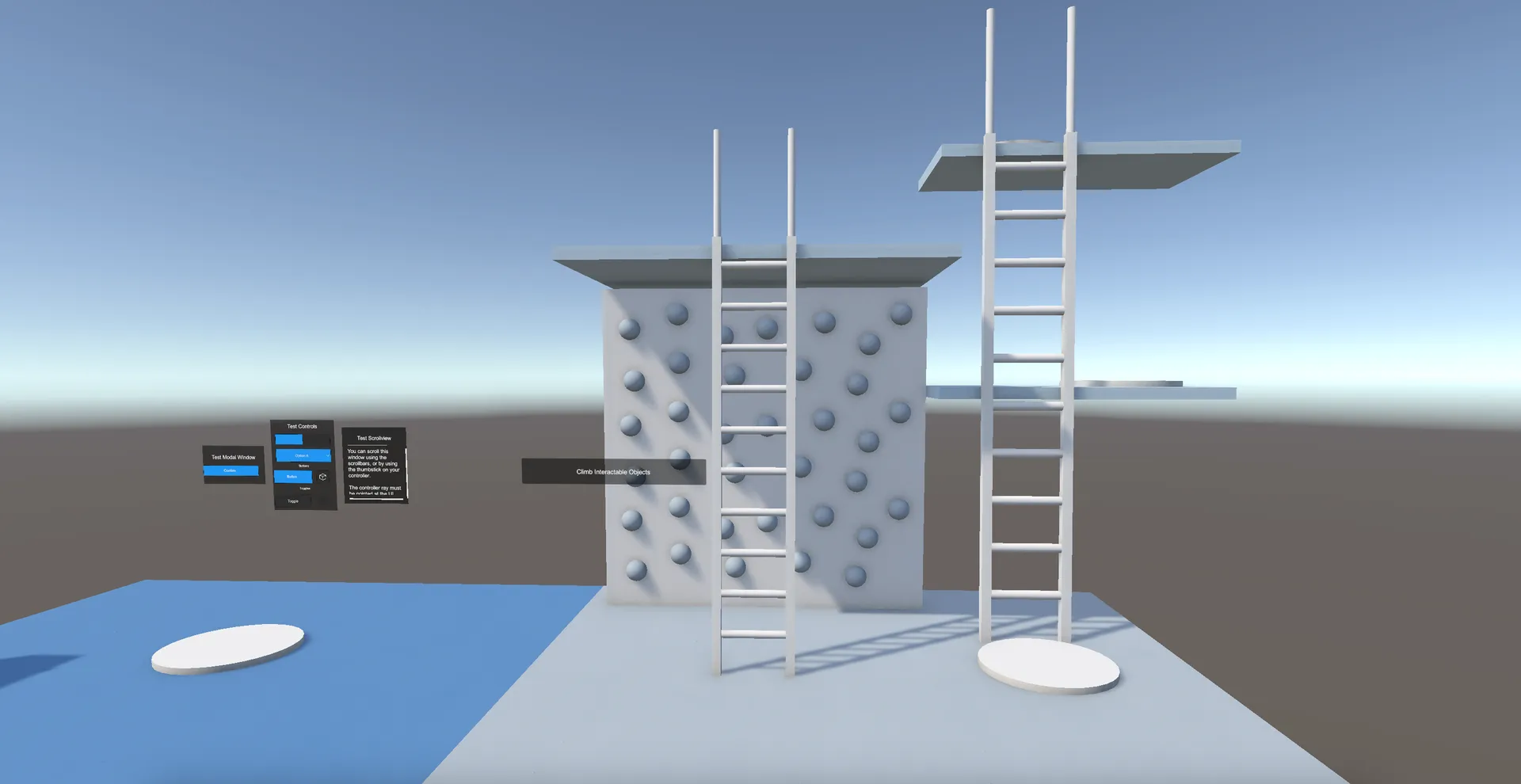
Early Unity prototype of the VR onboarding experience.
The final prototype for Getting Your VR Legs is a structured, narrative-driven onboarding experience with three progressive sections.
Each part addresses a specific aspect of first-time VR discomfort: introducing movement, easing spatial orientation, and gradually immersing users in a themed virtual world.
I built it in Unity for Meta Quest, designed for standalone use without external guidance.
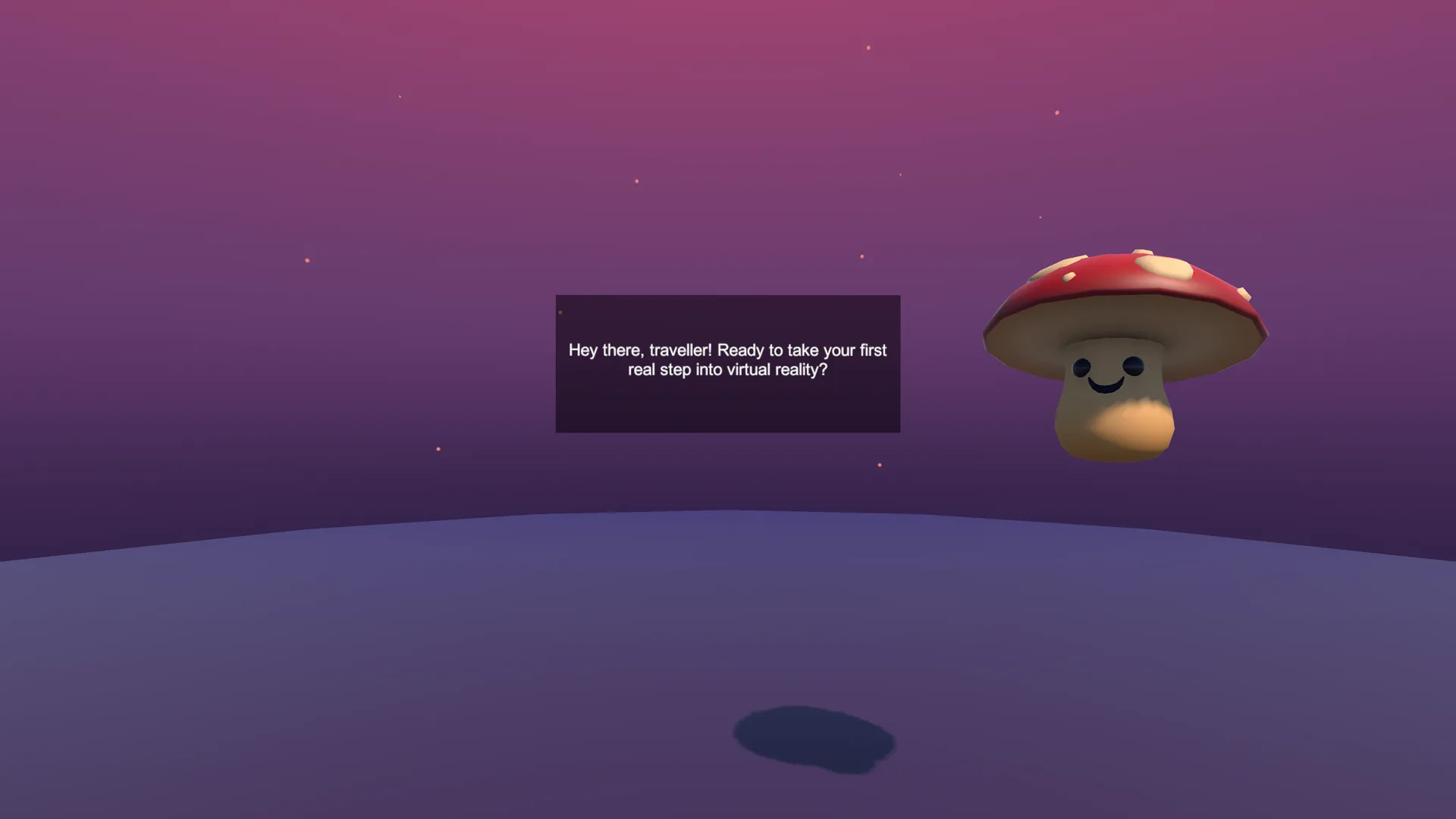
Calm visuals and lightweight prompts reduce cognitive load and establish self-paced progress (slow movement, breaks encouraged).
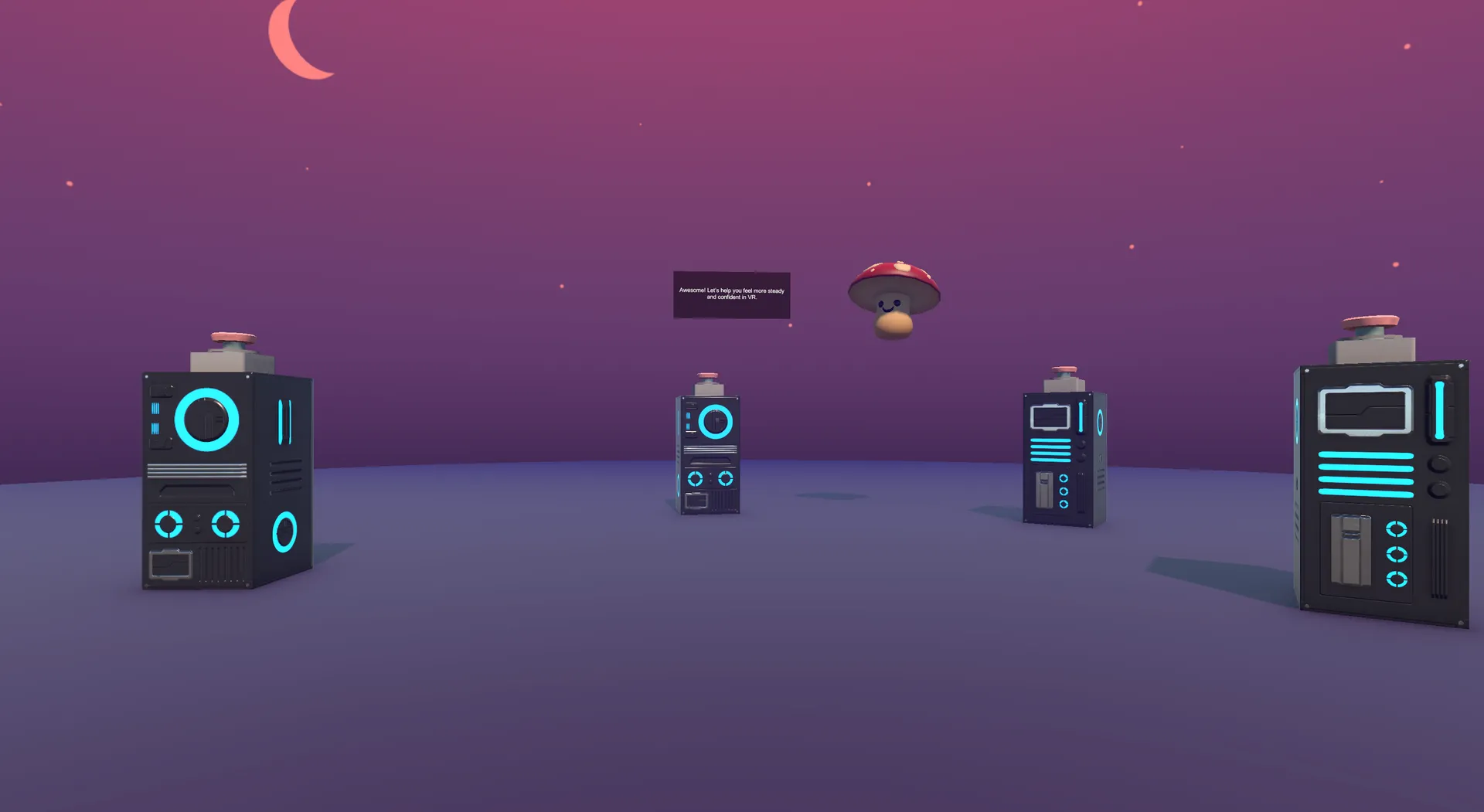
A self-paced space to build orientation and control: choice to explore first, then opt into movement.
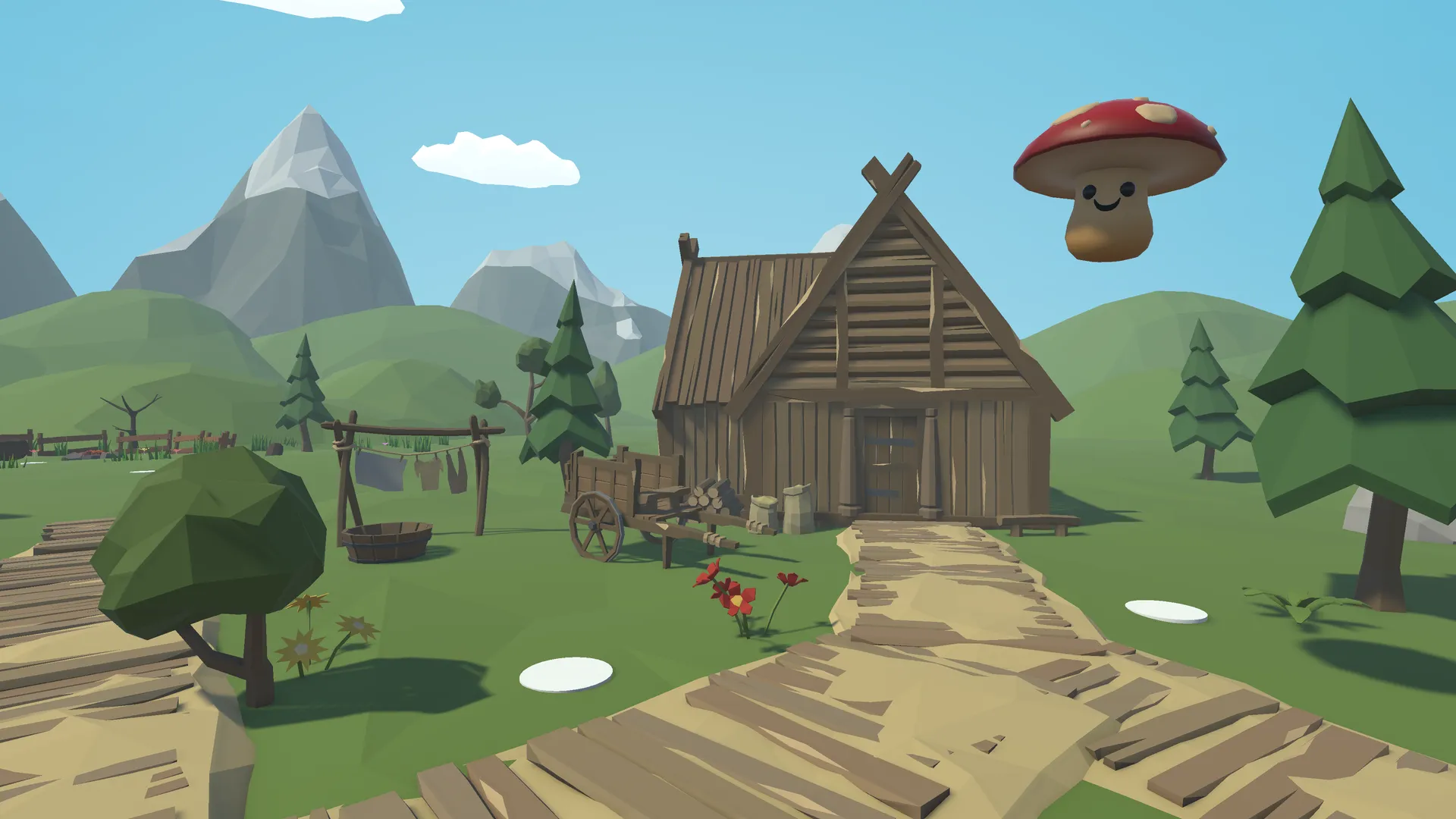
Guided movement in a low-pressure environment.
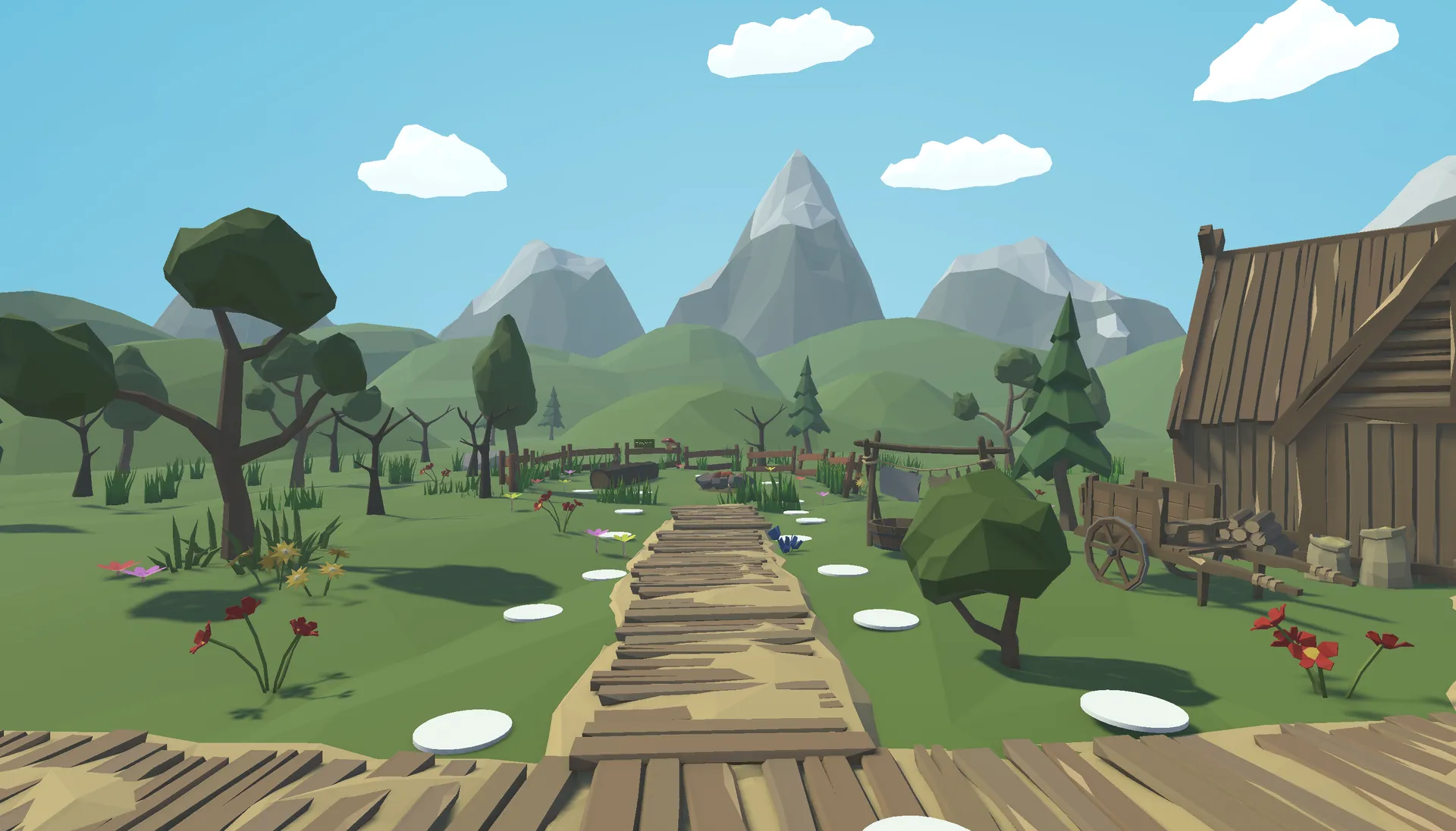
Anticipatory cues to help users feel more comfortable and in control.
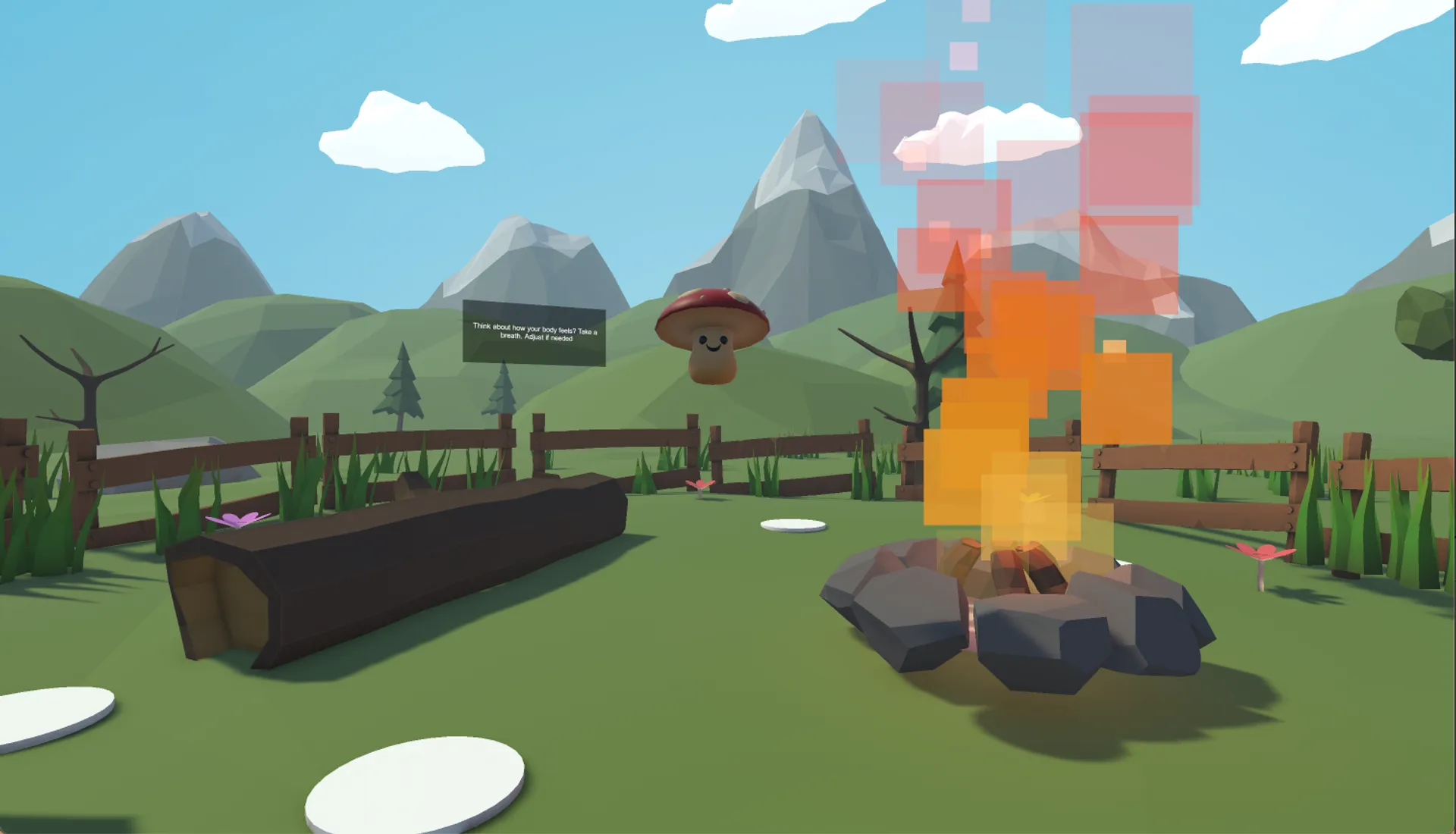
Ending with stillness to reinforce comfort before users enter more complex VR experiences.
I evaluated the prototype through: informal usability + comfort testing with novice VR users (classmates/friends), in-situ observation of hesitation, confusion, and stopping behavior and a quick pre/post self-rating (comfort + confidence, 1–7).
After iterations based on early feedback, I tested the final prototype with 5 new users and found that all reported increased comfort and confidence after going through the experience.
Users appreciated the pacing and narrative, noting that it helped them feel more at ease in VR. There were fewer “what do I do now?” moments after adding anticipatory cues. Users also reported feeling more ready to try other VR experiences after the final scene.
I presented Getting Your VR Legs at the HCI/d Poster Fair to peers, faculty, and external visitors with a working VR prototype.
Prof. Erik Stolterman Bergqvist noted how grounded the experience felt in HCI principles after trying the VR prototype.
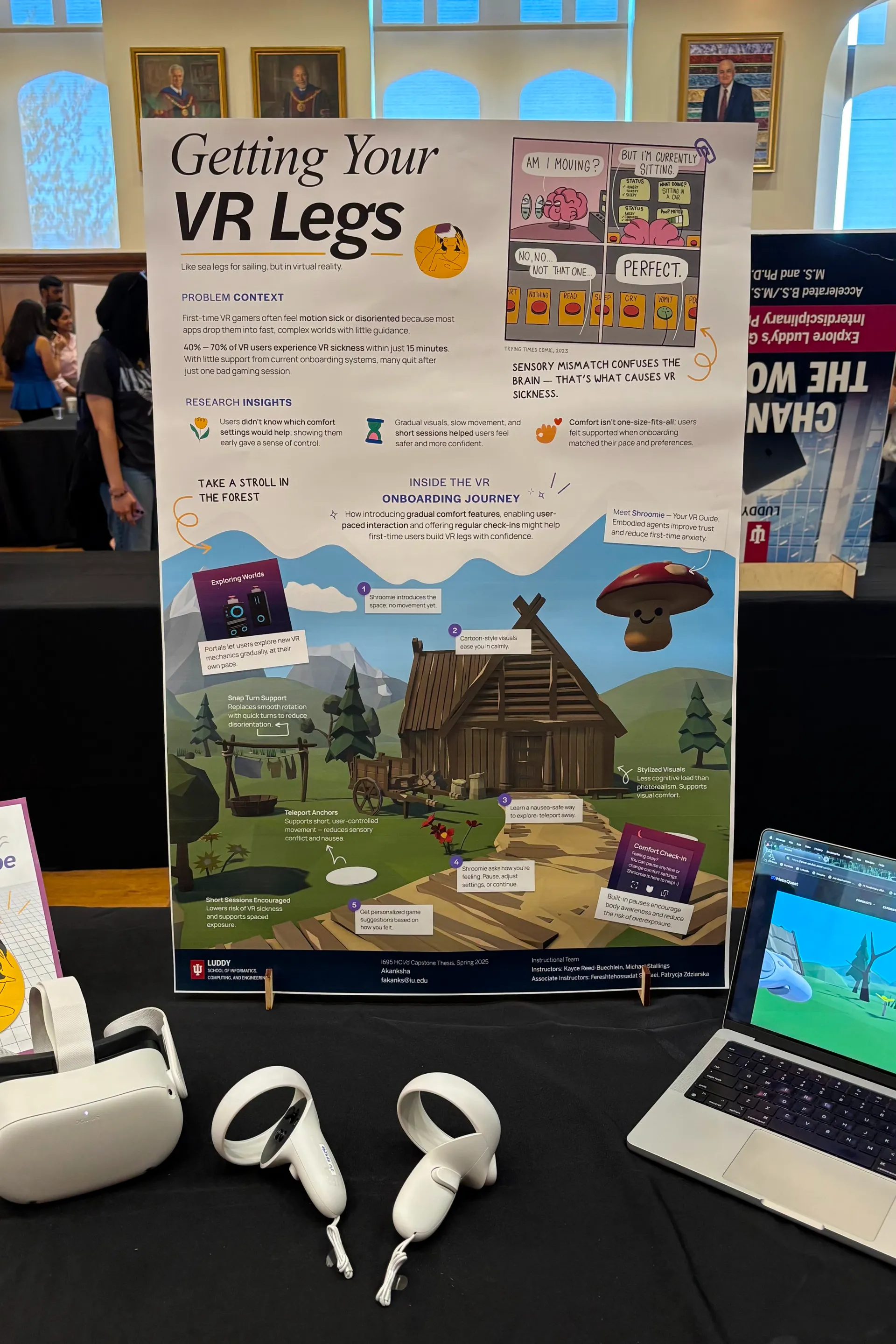
VR demo setup for the HCI/d Poster Fair.
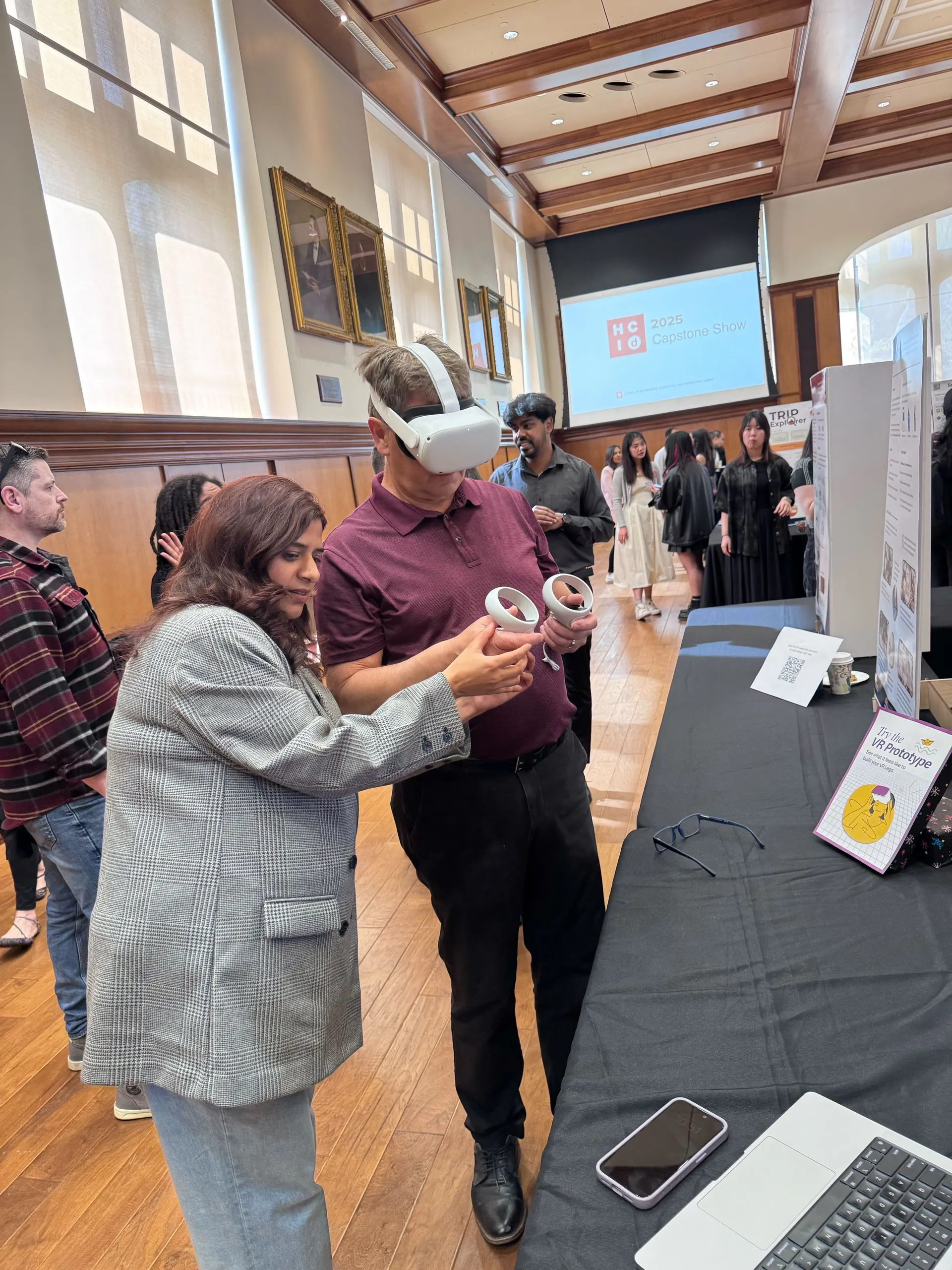
Prof. Erik Stolterman Bergqvist trying out the VR prototype.
Run a more structured study with 10–15 novice users using a standard short VR sickness measure (or even a simplified SSQ), compare self-paced vs fixed-paced onboarding, and add accessibility options (seated mode default, text readability tuning, comfort presets).
I’ll always be grateful to my teaching team and friends for supporting me throughout this project. I couldn’t have done it without them!
I started this as a research project, but it evolved into building my first VR prototype which is something I never expected to do. The leap from concept to working experience pushed me to trust my instincts as a designer, even when I wasn’t sure I had the technical skills.
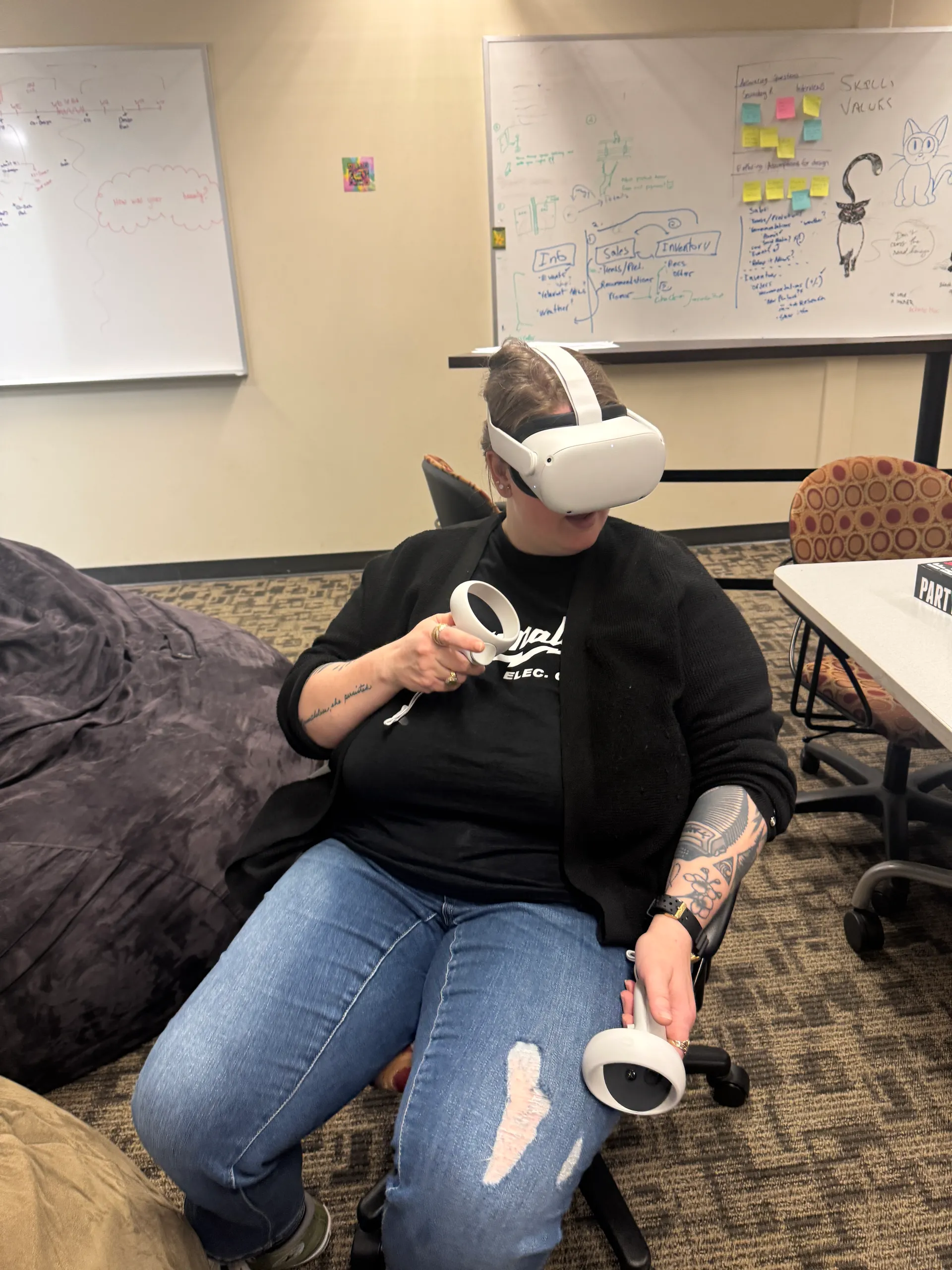
Prof. Kayce Reed-Buechlein giving feedback on the VR prototype.
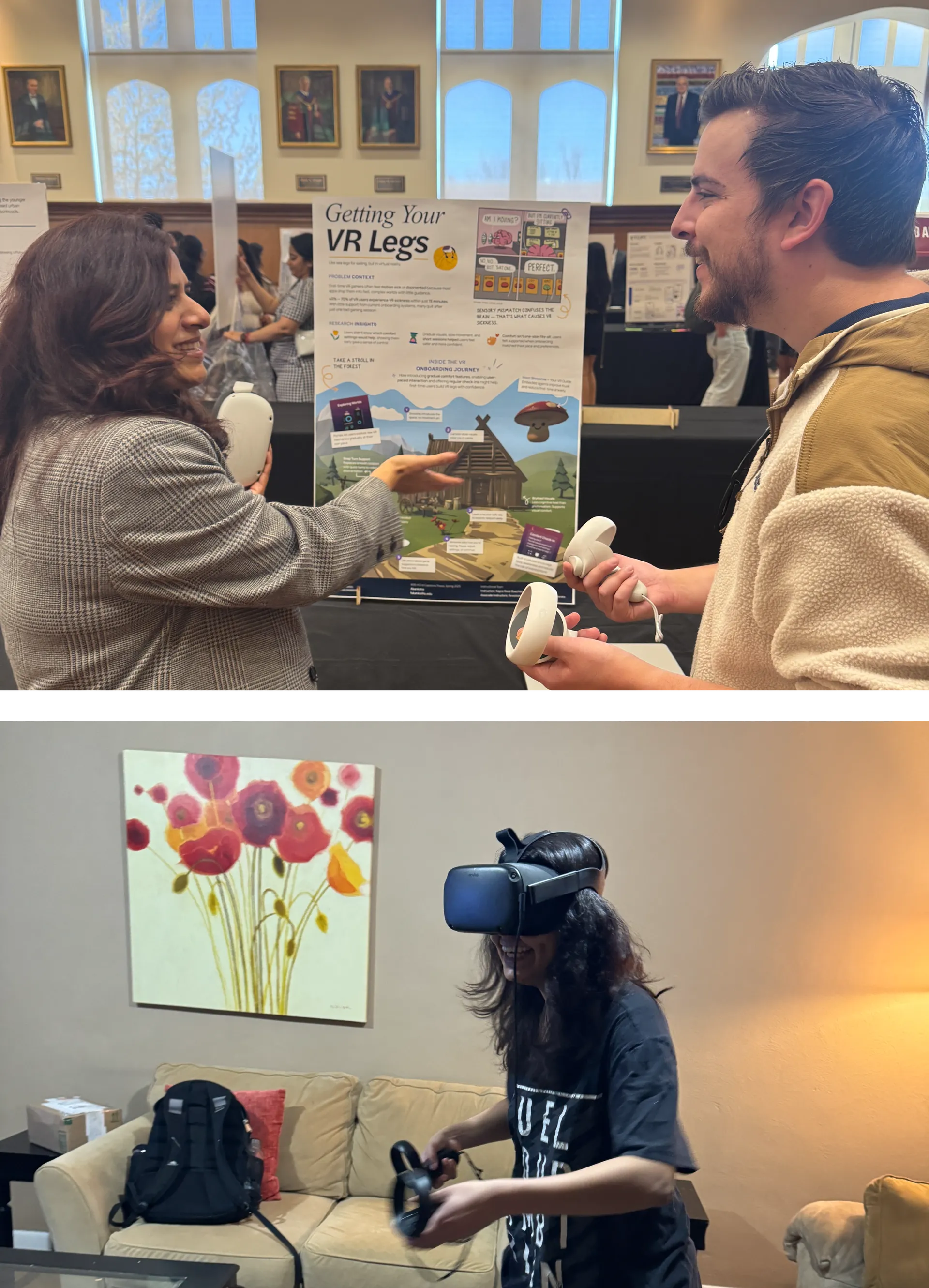
My friends trying out the final VR prototype.
There are other projects you can check out to see more of my work. Also, feel free to reach out if you'd like to work on something together!
