Getting Your VR Legs
Comfort-first onboarding for gamers new to virtual reality.
40% — 70% of VR users experience VR sickness within just 15
minutes. With little support from current onboarding
systems, many quit after just one bad gaming session.
This project explores how guided, comfort-aware onboarding
can reduce disorientation and help users build confidence in
VR. The final prototype rethinks the first steps into
yirtual reality.
I built this project as my capstone thesis in the HCI/d
Master's program at Indiana University Bloomington and it
reflects a synthesis of interaction design, human-centered
research, and experiential prototyping.
The Problem
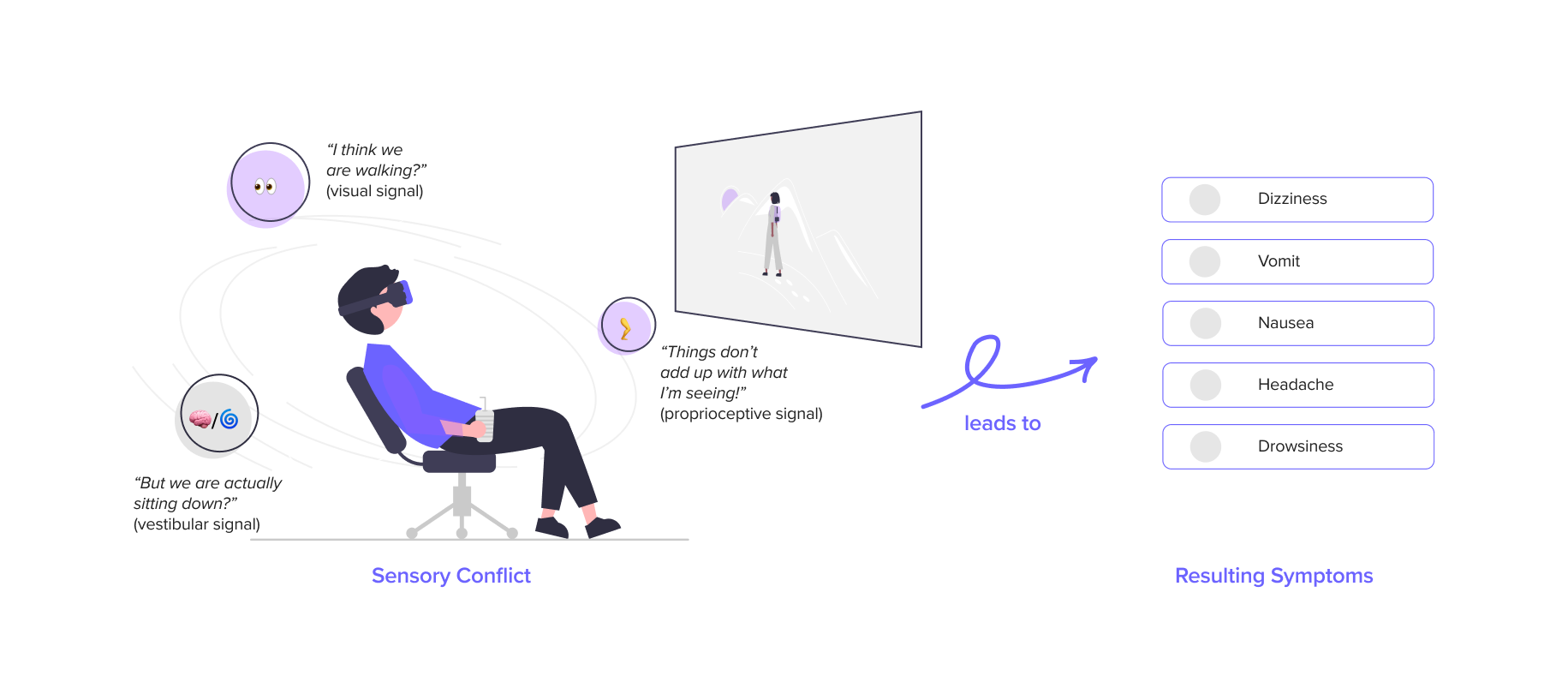
VR sickness happens when what you see doesn't match what
your body feels.
There's a clash between visual, balance, and motion signals.
For most users, that mismatch often leads to disorientation,
nausea and other related symptoms.
What's in Scope, What's Out?
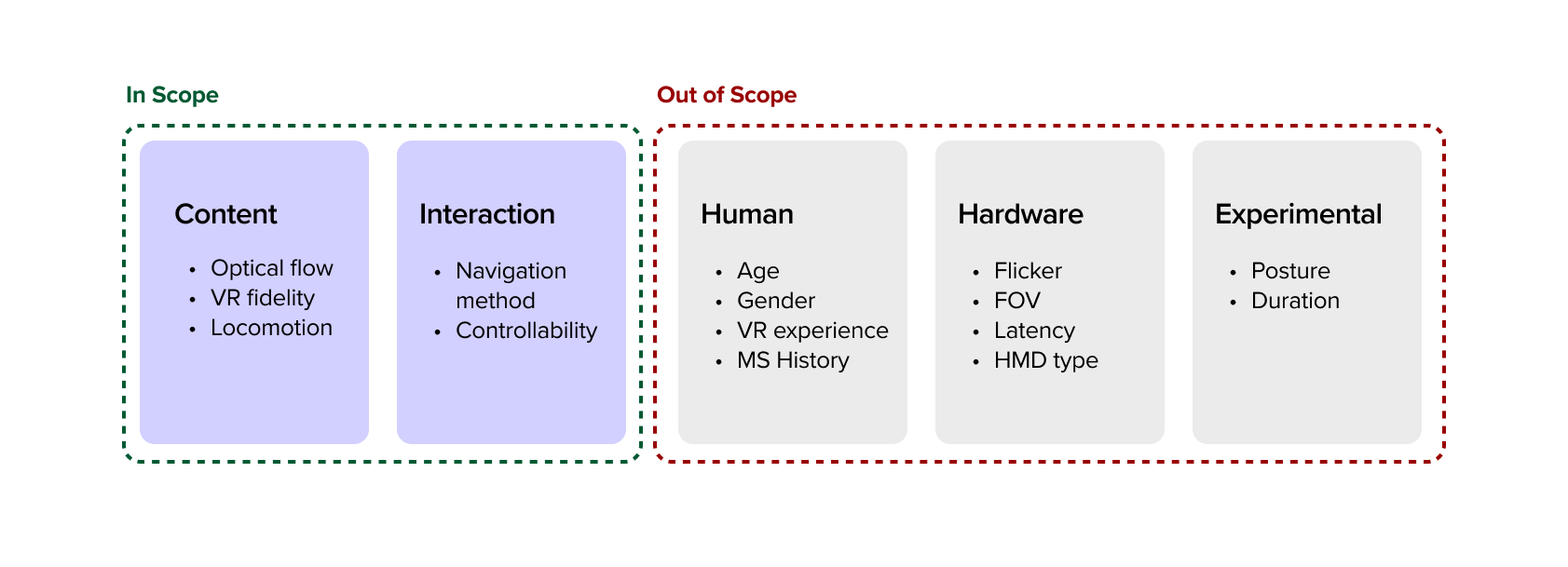
I focused on interaction and content pacing in virtual
reality.
These are the areas where design choices have the most
immediate impact on user comfort, especially for beginners
and new VR gamers.
I didn't address hardware limitations, individual
physiological differences, or experimental lab setups. While
these matter, this project frames VR sickness as a design
problem, not just a technical one.
Defining the Design Concept
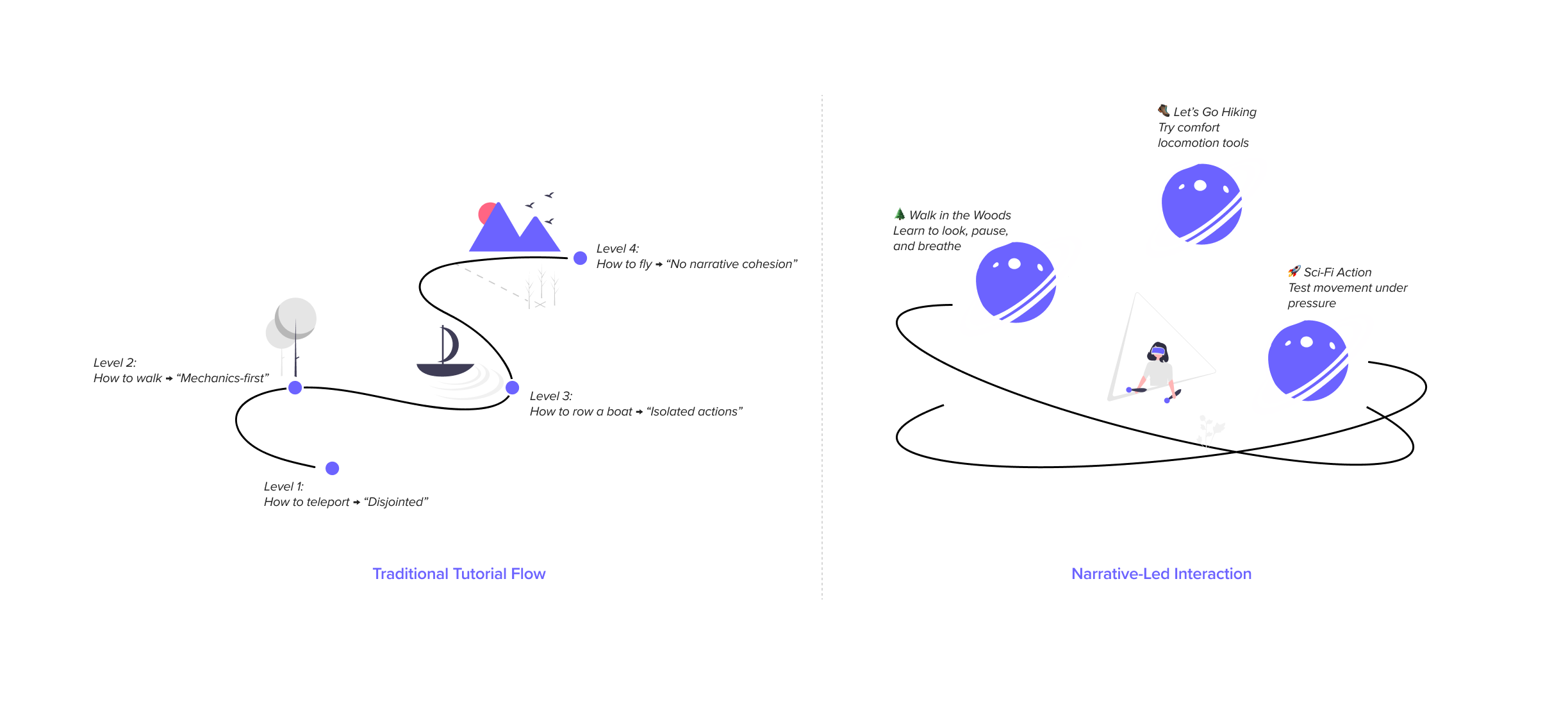
I designed for continuity, not just for features.
Unlike traditional games, where tutorials can be
compartmentalized, VR is continuous, meaning every sound,
motion, and delay contributes to a user's sense of presence.
Simply introducing comfort settings or movement styles one
at a time wasn't enough.
Users needed a cohesive experience where interaction,
pacing, and emotional tone worked together. I framed my
solution as a narrative-led interaction.
Early Prototyping & Concept Evaluations
Bodystorming and prototype testing revealed the need for
flexible pacing.
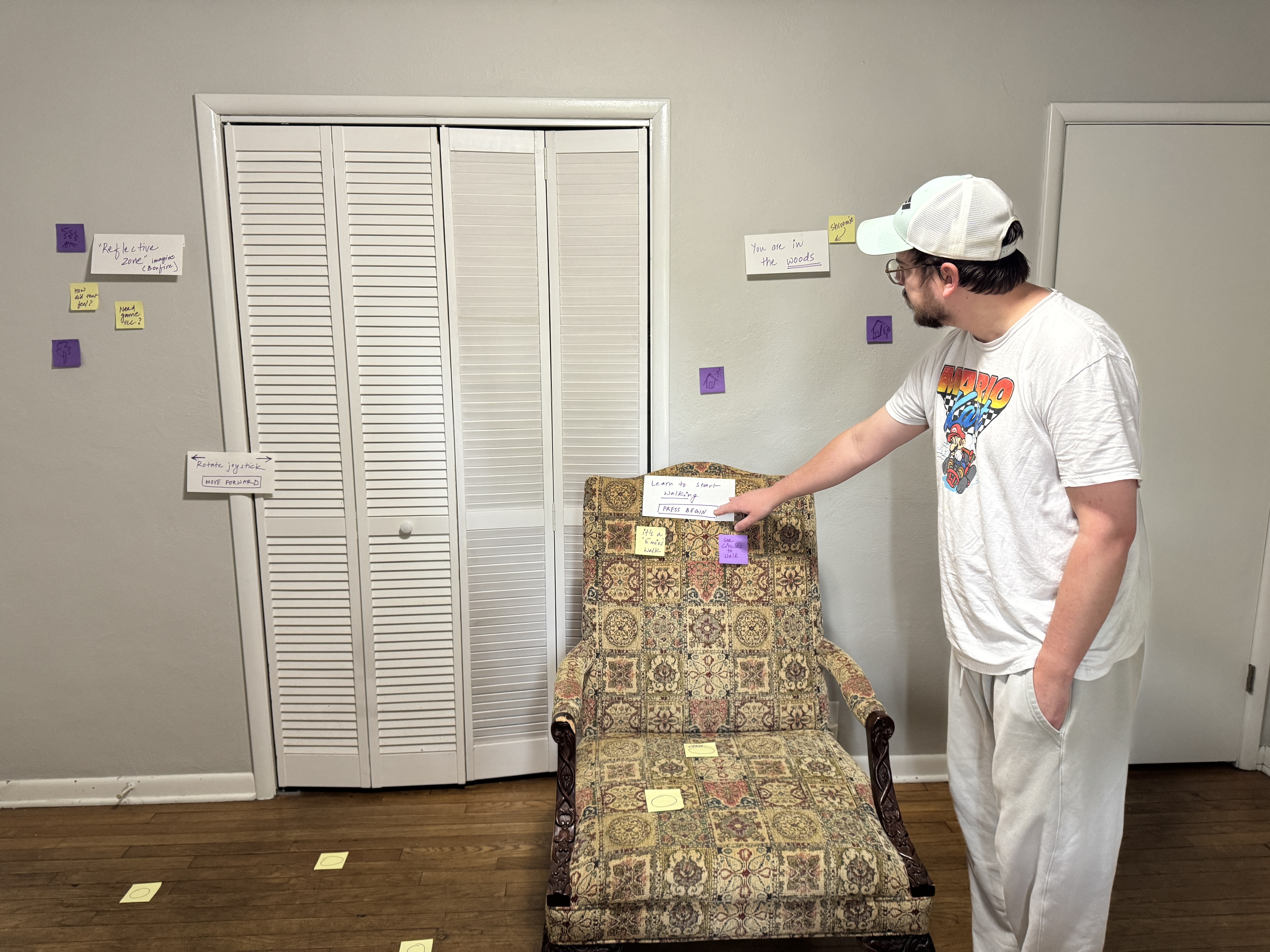
After my initial user research, I started with bodystorming
sessions to simulate key VR moments: entering scenes,
movement prompts, decisions in unfamiliar spaces.
Participants acted out interactions, revealing hesitation
during transitions. This informed narrative pacing,
anticipatory cues, and scaffolded choice design.
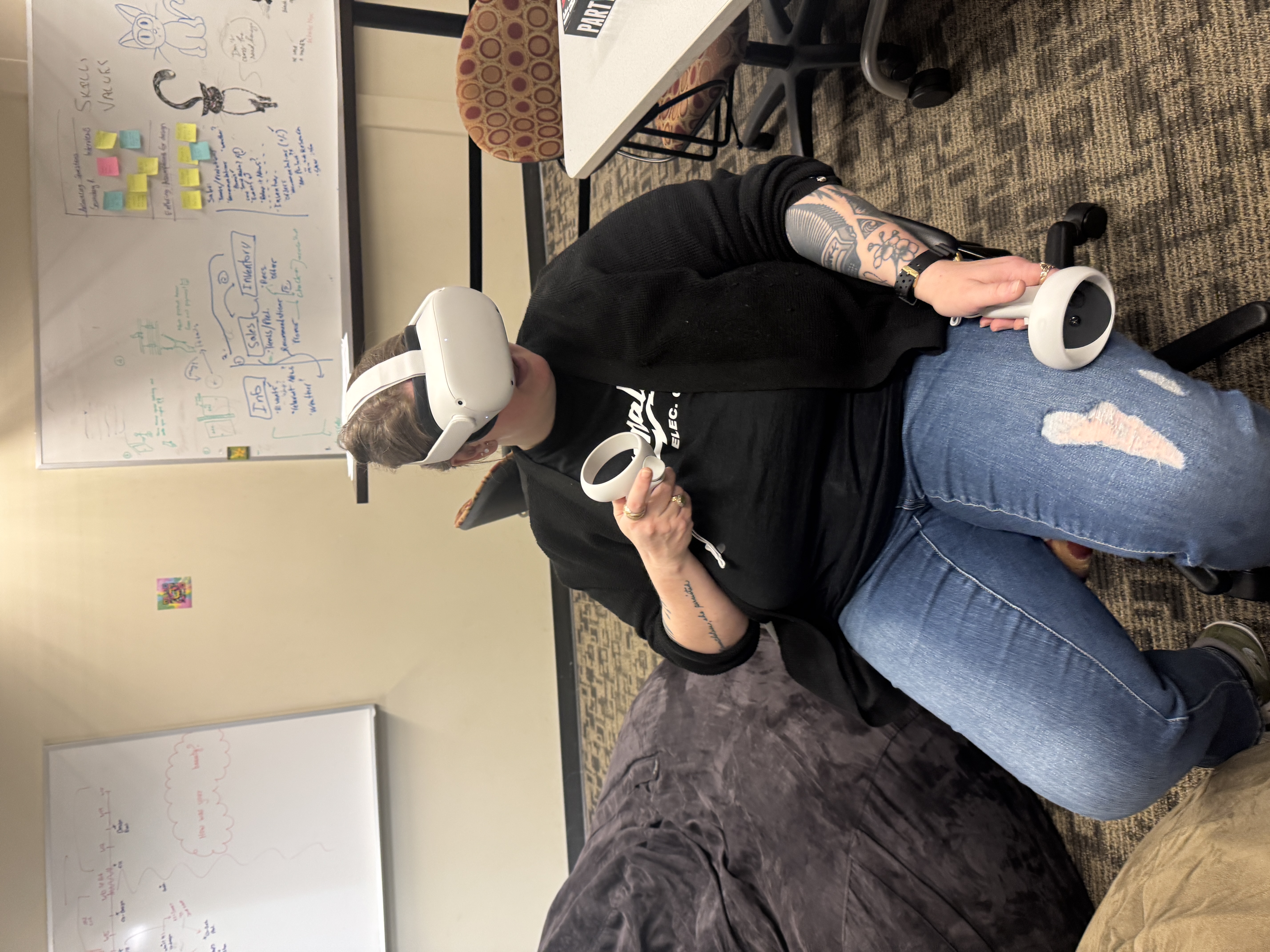
I then tested early Unity builds with classmates and friends
new to VR and learnt that users needed more time in each
scene to look around and acclimate before proceeding,
revealing that onboarding shouldn't follow a fixed tempo.
Early Prototyping & Concept Evaluations
A three-part narrative journey addressing specific VR
discomfort challenges.
The final prototype for Getting Your VR Legs is a
structured, narrative-driven onboarding experience with
three progressive sections. Each part addresses a specific
aspect of first-time VR discomfort—introducing movement,
easing spatial orientation, and gradually immersing users in
a themed virtual world.
Built in Unity for Meta Quest, it's designed for standalone
use without external guidance.

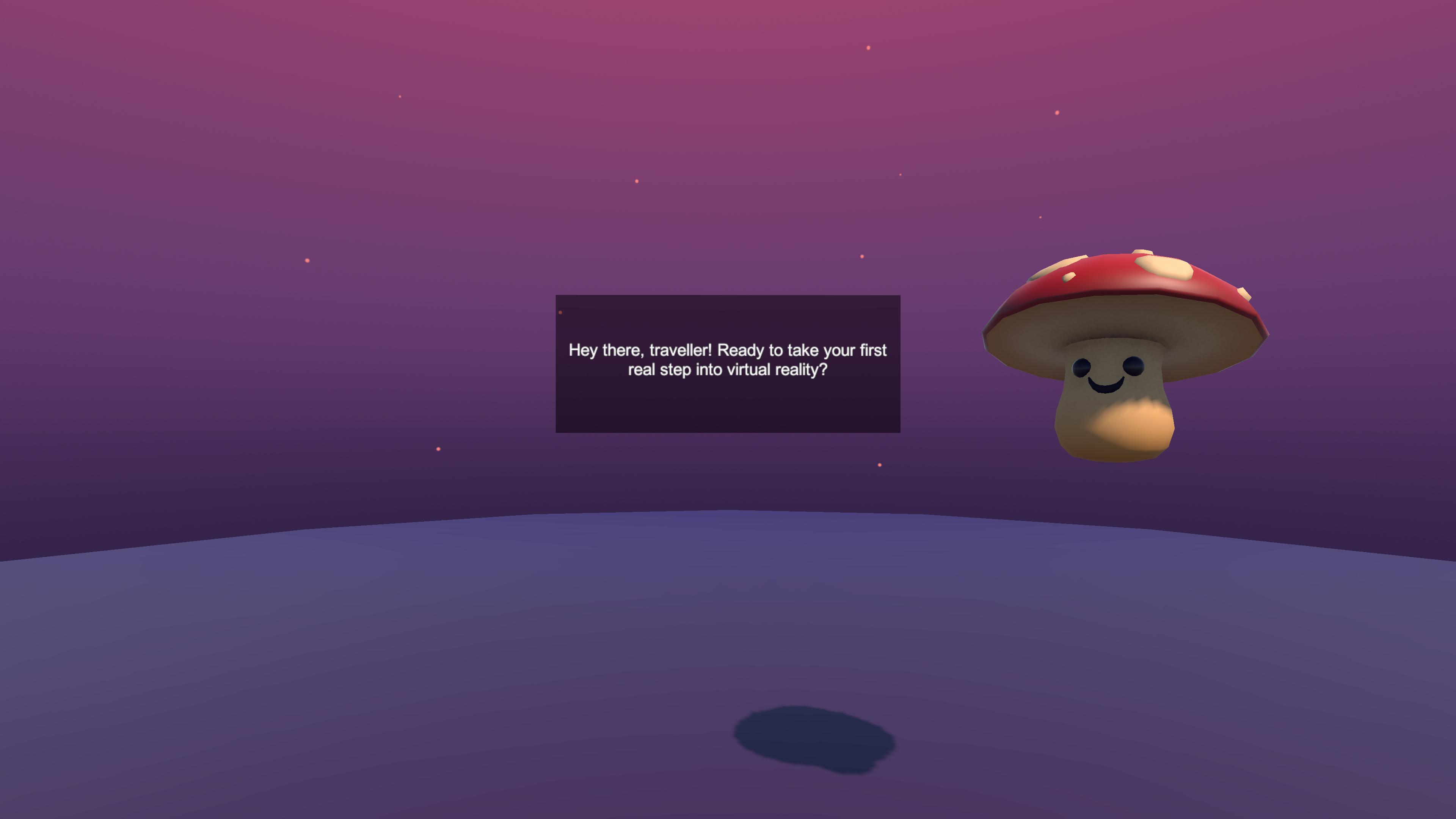
Meet Shroomie: A Gentle Start to the Journey
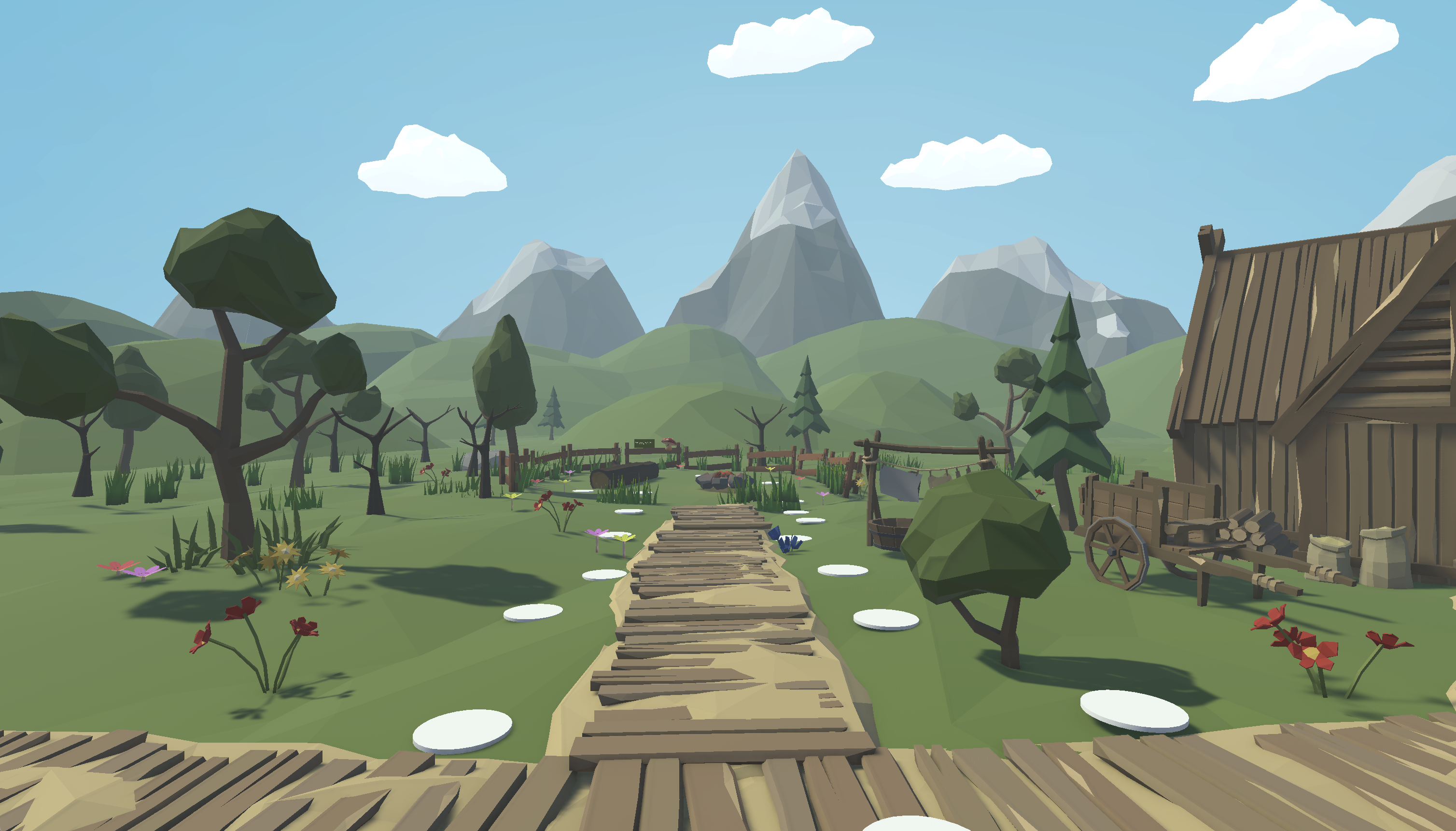
The experience begins in a calm, grounded space where users
meet Shroomie—a friendly guide who introduces them to the
world of VR. It gently reminds users that this journey will
be slow and steady, focused on easing in and tuning into how
their body responds in VR to discover what feels right for
them.
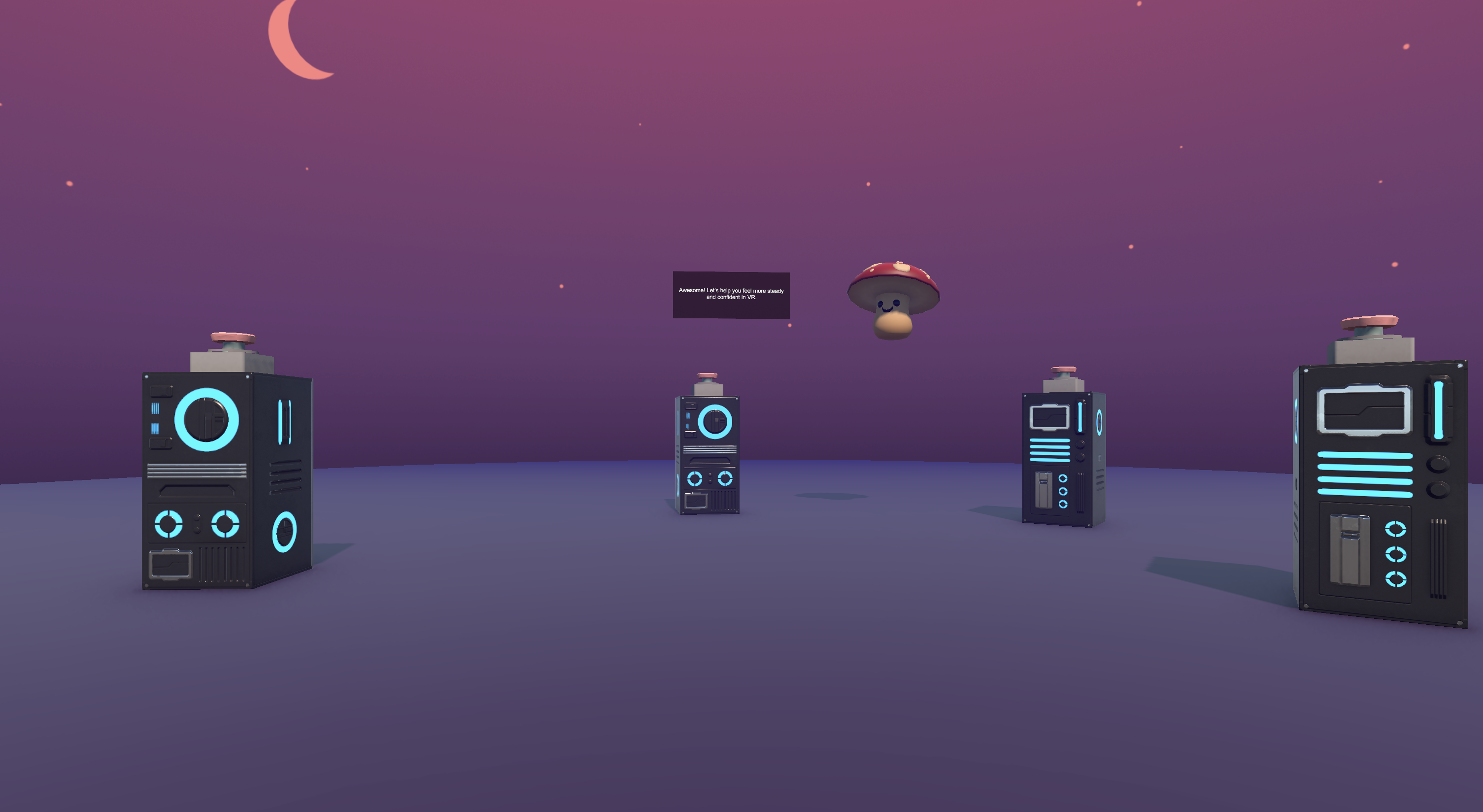
The Portal Room: First Step Toward Choice
After meeting Shroomie, users enter the Portal Room—a calm,
open space that introduces the idea of navigating between
different VR worlds. Each portal represents a different kind
of journey, giving users space to explore new mechanics and
gradually adapt to VR at their own pace.
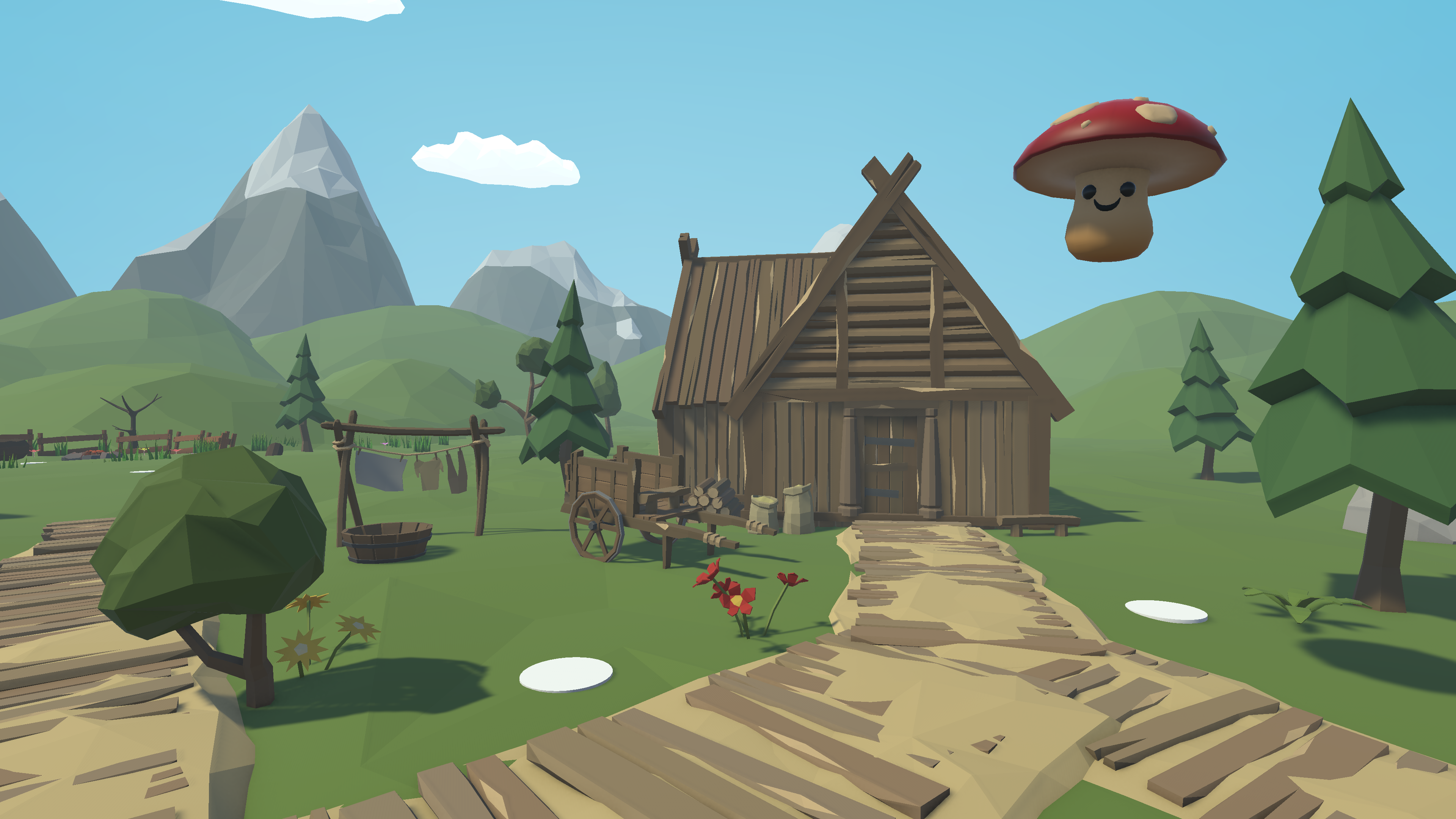
A Walk in the Forest: Explore Your Own Way
After selecting a portal, (in this case) user enter the
Forest—a quiet, open space for gentle, self-paced
exploration. Shroomie encourages trying different movement
styles, checking in with how their body feels, and pausing
at calming spots. Nothing is forced; it's all about finding
what works for the user.
Listening to Your Body
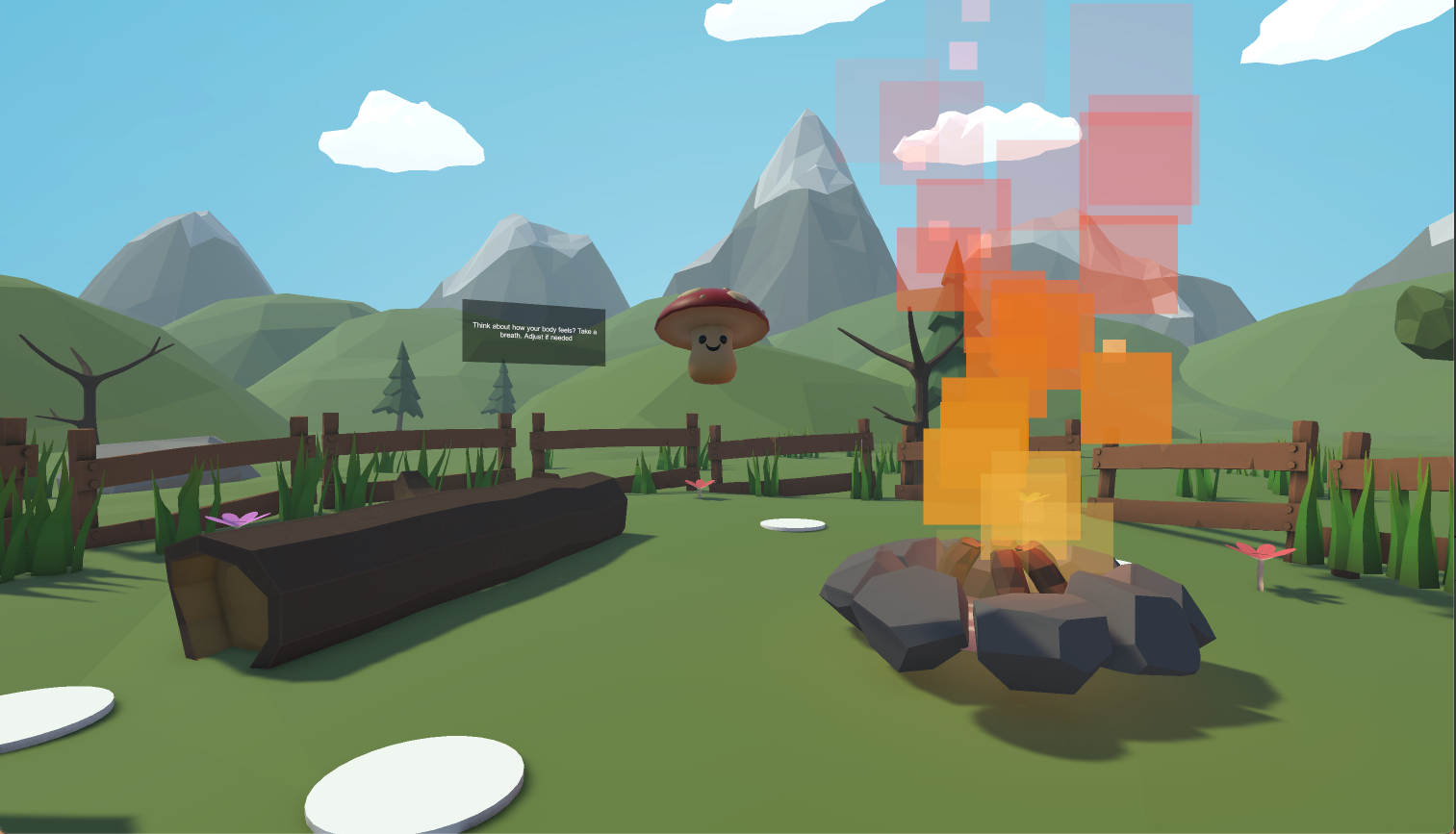
To complete this world, users are encouraged to look around
and try teleporting toward the bonfire, checking in with how
their body feels along the way. Shroomie observes and
responds, helping them reflect on their comfort as they go.
Rest by the Bonfire and find comfort
Once the user reaches the bonfire, they can sit down and
talk with Shroomie about how they're feeling. Shroomie helps
reflect on their comfort settings and offers adjustments to
better tailor the VR world to their needs.
Each part of the experience is designed to help users build confidence, reduce anxiety, and understand their VR comfort. Instead of typical tutorials, Getting Your VR Legs uses tone, pacing, character, and choice to create a meaningful, embodied learning process. It's not a game or simulation, but a carefully crafted first step that encourages users to take the next.
Each part of the experience is designed to help users build confidence, reduce anxiety, and understand their VR comfort. Instead of typical tutorials, Getting Your VR Legs uses tone, pacing, character, and choice to create a meaningful, embodied learning process. It's not a game or simulation, but a carefully crafted first step that encourages users to take the next.
Capstone Feedback
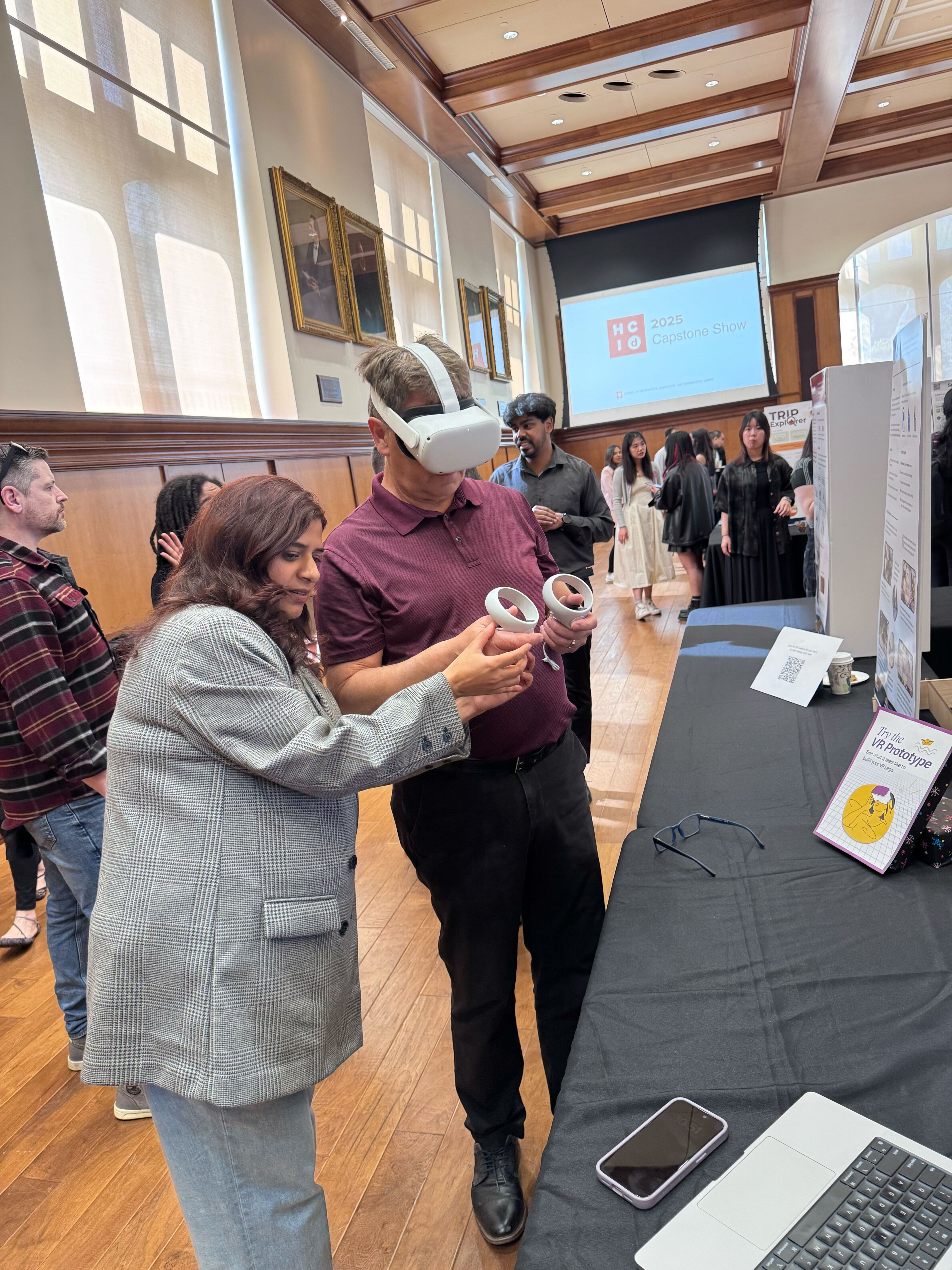
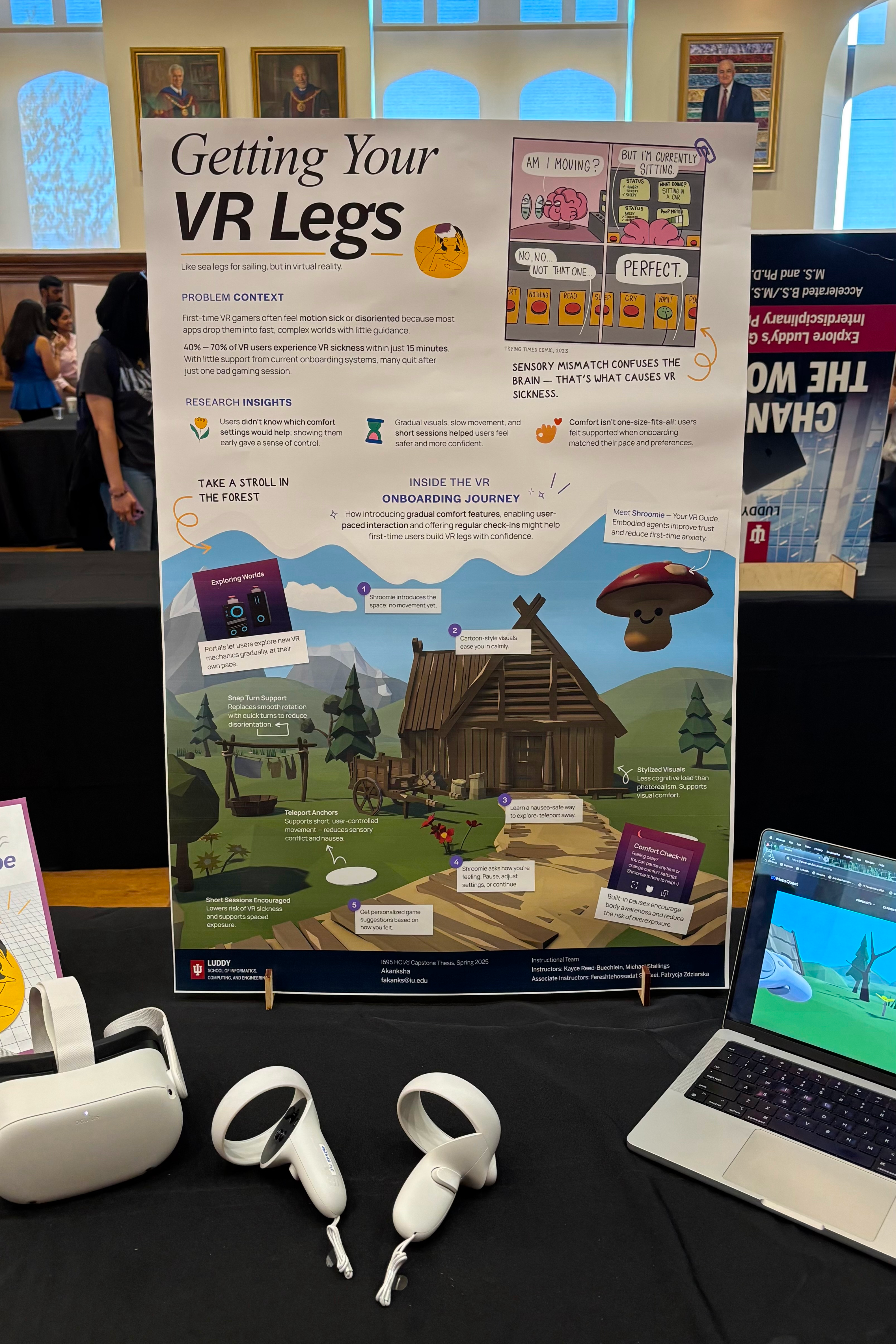
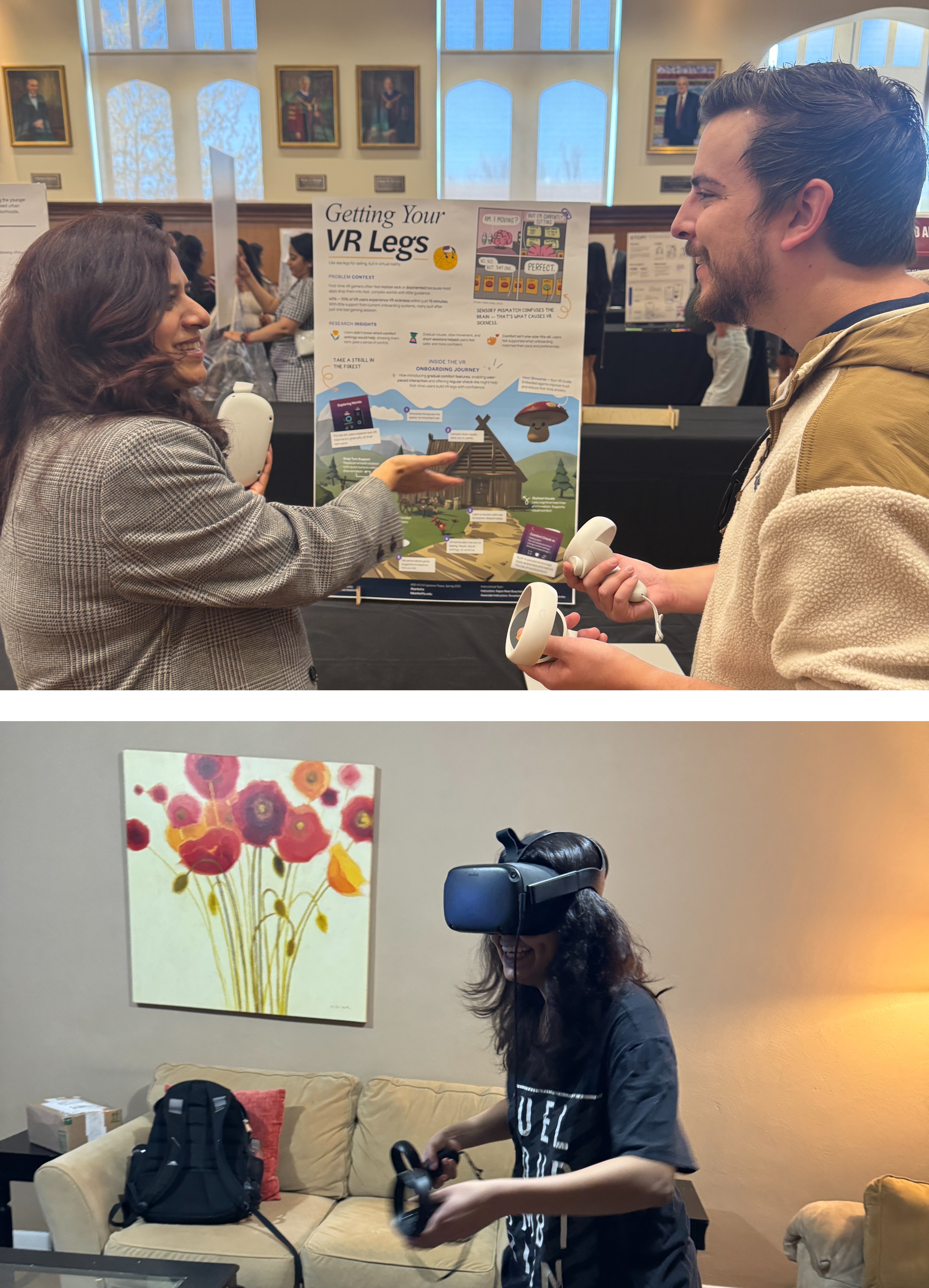
Getting Your VR Legs was presented at the HCI/d Poster Fair
to peers, faculty, and external visitors. I built a working
VR prototype using OpenXR on Meta Quest 2 to demonstrate how
the concept works and help people understand the experience.
Prof. Erik Stolterman Bergqvist noted how grounded the experience felt in HCI principles after trying the VR prototype.
Prof. Erik Stolterman Bergqvist noted how grounded the experience felt in HCI principles after trying the VR prototype.
Thank You Note
I'll always be grateful to my teaching team and friends for
supporting me throughout this project. I couldn't have done
it without them!
What I Learnt
I started this as a research project, but it evolved into
building my first VR prototype—something I never expected to
do. The leap from concept to working experience pushed me to
trust my instincts as a designer, even when I wasn't sure I
had the technical skills.
If I could do it again, I'd test more systematically earlier and explore accessibility features. But there's real potential here to rethink how we welcome people into virtual spaces.
If I could do it again, I'd test more systematically earlier and explore accessibility features. But there's real potential here to rethink how we welcome people into virtual spaces.